Best Binoculars for Stargazing
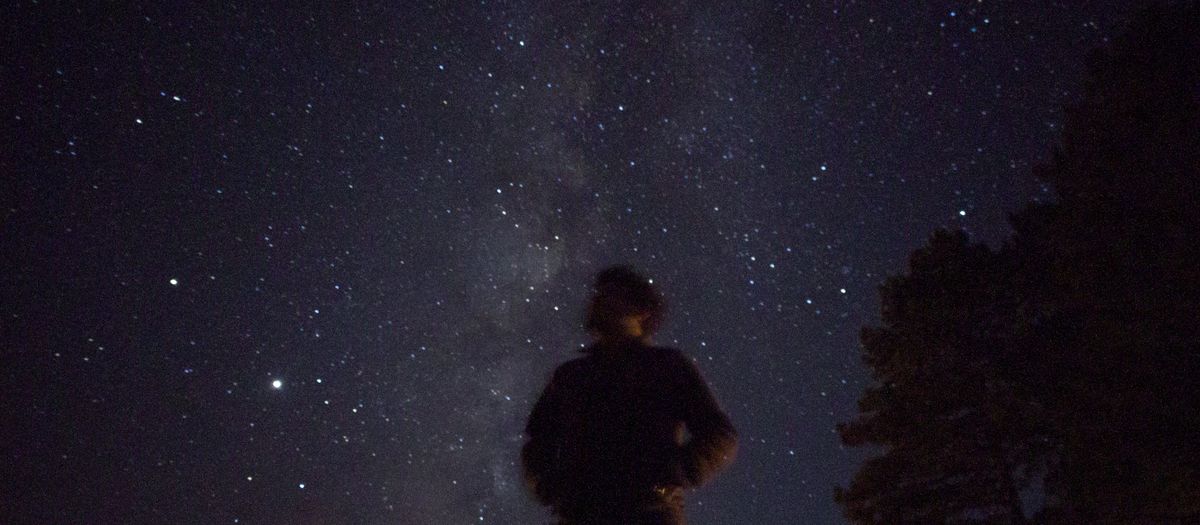
For the night sky, big objectives and a generous exit pupil do the heavy lifting — they pull in the faint light that shows you the Moon's craters, Jupiter's moons and the Pleiades. A 10×50 is the do-everything astronomy starter; 15×70 giant binoculars go deeper but want a tripod. This guide explains the specs that decide what you will actually see — magnification, objective, exit pupil, field of view, weight and prism type — then matches them to five categories: best overall 10×50, best budget, best giant astro 15×70, best wide-field and best grab-and-go. Verified picks appear in each slot once real product data is in.
A note on how to read this. There is no single "best" astronomy binocular for everyone — the right one depends on whether you want a pair you can hold by hand, how dark your sky is, and whether you will use a tripod. So the value here is the framework: what each spec changes under the stars, so you can shortlist a pair that fits how and where you observe. Read the framework first, then look at the picks. The one thing worth saying up front, from a lot of nights as a backyard astronomer: the wide, bright, low-power view a 10×50 gives — whole star clusters and the Milky Way in one field — is what hooks most people on the night sky, far more than chasing the highest magnification. Safety, plainly and without softening: never look at the Sun through binoculars — permanent eye damage is instant. Binoculars are for the Moon, planets and night sky, not the Sun.
Specs verified against manufacturer details and current Amazon listings — no hands-on testing claims. Exit pupil and twilight-factor figures are physics-derived from published specs (exit pupil = objective ÷ magnification; twilight factor = √(magnification × objective)).
How to choose binoculars for stargazing
A handful of specs decide what an astronomy binocular shows you — and under the stars, objective and exit pupil matter more than magnification.
Objective and exit pupil — the light-gathering specs
Astronomy is a hunt for faint light, so the objective — the front lens diameter — does the heavy lifting. A 50mm objective gathers more than twice the light of a 32mm, and a 70mm more than twice again, which is why 50mm is the astronomy staple and 70mm the giant-binocular standard. The objective pairs with magnification to set the exit pupil, the width of the light beam reaching your eye: exit pupil = objective ÷ magnification.
Under a dark sky your pupil opens to about 5–7mm, and you want the exit pupil to roughly match so no gathered light is wasted. Spec-by-spec, a 10×50 gives a 5mm exit pupil, a 7×50 a generous 7.1mm, and a 15×70 about 4.7mm — all in the useful range. A 10×42 drops to 4.2mm, fine by day but dimmer under the stars. This is exactly why the bright-day birding default of an 8×42 is not the astronomy default; the night sky wants the bigger glass. The birding binoculars guide covers the daytime side of the same trade-off.
Magnification, twilight factor and what you will see
Magnification sets how much detail you resolve. Ten power is the sweet spot for a hand-holdable astronomy binocular: enough to show the Moon's craters sharply and split Jupiter's moons from the planet, while staying steady enough for short hand-held looks. Push to 15× or 20× and you resolve more — but the image shakes too much to hold by hand, so those magnifications demand a tripod. The related figure is the twilight factor, √(magnification × objective): a 10×50 scores √500 ≈ 22.4 and a 15×70 scores √1050 ≈ 32.4, predicting more detail in faint light from the bigger, higher-power pair.
What this buys you in the sky is concrete. A 10×50 shows the Moon in crisp relief, Jupiter's four bright moons, the Pleiades and other open clusters spread across a wide field, the Andromeda galaxy as a soft glow, and the Milky Way resolved into stars. What binoculars will not show is planetary surface detail or Saturn's rings clearly — that is a telescope's job, covered in passing on the astronomy hub. For wide, rich, easy night-sky views, binoculars are the best first instrument there is.
Weight, tripod and prism type
Weight decides how you use the pair. A 10×50 is light enough to hold by hand for short looks or to rest on a reclining chair; a 15×70 is heavy enough that a tripod is effectively mandatory, because at 15× the shake of unsupported hands ruins the view. Spec-by-spec, any astronomy binocular over about 12× wants a tripod adapter — the single most worthwhile companion buy — to turn a wobbling image into a steady, restful one you can study.
Prism type also shifts with the use. Porro-prism binoculars dominate astronomy at the larger sizes: they deliver big objectives and wide, three-dimensional fields for less money than an equivalent roof prism, and their bulk matters less when the pair lives on a tripod anyway. Roof prisms stay slimmer and lighter, which suits a grab-and-go astronomy pair you also carry by day. The best compact binoculars guide covers the lightweight, grab-and-go end of that range.
The astronomy binoculars compared
A short list of widely available astronomy binoculars, compared on the specs above. Specs are verified against manufacturer details and current Amazon listings — no hands-on testing claims.
| Best for | Magnification | Objective (mm) | Exit pupil | FOV (ft@1000yd) | Weight |
|---|---|---|---|---|---|
| Best overall (10×50) | 10x | 50 mm | 5 mm | 315 ft | 30 oz (850 g) |
| Best budget | 10x | 50 mm | 5 mm | 289 ft (5.6°) | 1.7 lb (0.76 kg) |
| Best giant astro (15×70) | 15x | 70 mm | 4.7 mm | 231 ft (4.4°) | 3.28 lb |
| Best wide-field | 7x | 50 mm | 7.1 mm | 346 ft (6.6°) | 2 lb |
| Best grab-and-go | 10x | 42 mm | 4.2 mm | 304 ft | Not listed |
Our top picks
Best overall (10×50): Vortex Optics Diamondback HD 10x50 Binoculars - HD Optical System, Fully Multi-Coated, Waterproof, Fogproof

Best overall (10×50)
Vortex Optics Diamondback HD 10x50 Binoculars - HD Optical System, Fully Multi-Coated, Waterproof, Fogproof
Vortex Optics
- Magnification: 10x
- Objective (mm): 50 mm
- Exit pupil: 5 mm
- FOV (ft@1000yd): 315 ft
- Weight: 30 oz (850 g)
- Prism: Roof (fully multi-coated)
The Vortex Diamondback HD 10x50 pairs an HD optical system with a 5 mm exit pupil for bright wide-aperture views, making it the best all-round 10x50 for handheld stargazing — backed by Vortex's unlimited VIP warranty.
Last checked 2026-06-15
Best budget: Celestron - Outland X 10x50 Binoculars – Ideal for Birding and Outdoors – 50mm Objective Lenses – 5.6° Field of View – BaK-4 Prisms – Multi-Coated – Waterproof and Fogproof

Best budget
Celestron - Outland X 10x50 Binoculars – Ideal for Birding and Outdoors – 50mm Objective Lenses – 5.6° Field of View – BaK-4 Prisms – Multi-Coated – Waterproof and Fogproof
Celestron
- Magnification: 10x
- Objective (mm): 50 mm
- Exit pupil: 5 mm
- FOV (ft@1000yd): 289 ft (5.6°)
- Weight: 1.7 lb (0.76 kg)
- Prism: BaK-4 Porro
The Celestron Outland X 10x50 is a waterproof, multi-coated 10x50 with BaK-4 prisms and a 5 mm exit pupil at an entry price — the best-value way into wide-aperture stargazing.
Last checked 2026-06-15
Best giant astro (15×70): Celestron SkyMaster 15x70 Astronomy Binoculars – Bestselling Binoculars for Stargazing & Long-Range Viewing – Includes Tripod Adapter & Carry Case – Multi-Coated Optics

Best giant astro (15×70)
Celestron SkyMaster 15x70 Astronomy Binoculars – Bestselling Binoculars for Stargazing & Long-Range Viewing – Includes Tripod Adapter & Carry Case – Multi-Coated Optics
Celestron
- Magnification: 15x
- Objective (mm): 70 mm
- Exit pupil: 4.7 mm
- FOV (ft@1000yd): 231 ft (4.4°)
- Weight: 3.28 lb
- Prism: BaK-4 Porro
The Celestron SkyMaster 15x70 delivers 70 mm of light grasp and 15x power with an included tripod adapter, the long-standing best-value giant binocular for deep-sky and lunar viewing from a mount.
Last checked 2026-06-15
Best wide-field: Celestron - Cometron 7x50 Astronomy Binoculars – Entry-Level for Stargazing and Comet Watching – Large 50mm Objective Lenses – Wide 6.6° Field of View – Multi-Coated Optics

Best wide-field
Celestron - Cometron 7x50 Astronomy Binoculars – Entry-Level for Stargazing and Comet Watching – Large 50mm Objective Lenses – Wide 6.6° Field of View – Multi-Coated Optics
Celestron
- Magnification: 7x
- Objective (mm): 50 mm
- Exit pupil: 7.1 mm
- FOV (ft@1000yd): 346 ft (6.6°)
- Weight: 2 lb
- Prism: BaK-4 Porro
The Celestron Cometron 7x50 combines low 7x power, a wide 6.6° field, and a large 7.1 mm exit pupil for bright, sweeping handheld views of star fields, comets, and the Milky Way — the classic wide-field stargazing binocular.
Last checked 2026-06-15
Best grab-and-go: Celestron - Nature DX 10x42 Binoculars – Ideal for Birding and Outdoors – 42mm Objective Lenses – 5.8° Field of View – BaK-4 Prisms – Fully Multi-Coated – Waterproof and Fogproof

Best grab-and-go
Celestron - Nature DX 10x42 Binoculars – Ideal for Birding and Outdoors – 42mm Objective Lenses – 5.8° Field of View – BaK-4 Prisms – Fully Multi-Coated – Waterproof and Fogproof
Celestron
- Magnification: 10x
- Objective (mm): 42 mm
- Exit pupil: 4.2 mm
- FOV (ft@1000yd): 304 ft
- Weight: Not listed
- Prism: BaK-4 roof
The Celestron Nature DX 10x42 is a compact, fully multi-coated roof-prism binocular that's light enough to grab on a whim for casual constellation and Moon viewing without setting up a mount.
Last checked 2026-06-15
Who should buy what
The beginner learning the sky — best overall 10×50
The best overall slot is a 10×50, and it is the right first astronomy binocular for almost everyone. Spec-by-spec, the 50mm objective gathers ample light, the 10× magnification resolves the Moon and bright objects, and the 5mm exit pupil stays bright for a dark-adapted eye — while the pair remains light enough to hold by hand for short looks. The wide field makes finding objects easy and turns star clusters and the Milky Way into the views that hook people on the hobby.
The trade-off is reach: a 10×50 will not pull in the faintest galaxies the way a 15×70 on a tripod can. For a beginner that is no loss — learning to find things in a wide, bright, steady field matters far more than squeezing out the dimmest targets. This is the configuration most backyard astronomers start with, and the one fewest regret. Unsure between this and a giant pair? The binocular matcher weighs it against how dark your sky is.
The first pair on a budget — best budget
The best budget slot is about getting a real astronomy configuration — a 50mm objective and a 5mm-class exit pupil — without paying for premium glass. Spec-by-spec, a budget 10×50 gathers the same light and gives the same wide, bright field as an expensive one; what you give up is edge sharpness, coating quality and a little contrast, not the fundamental ability to show the Moon, Jupiter's moons and the Pleiades.
What you sacrifice is refinement: softer stars toward the edge of the field, a touch more glare around the Moon, slightly less contrast on faint objects. For a first astronomy pair that is exactly the right compromise, because the light-gathering that matters is intact. Many a backyard astronomer starts with a budget 10×50, learns the sky, and only then decides whether to spend on premium glass or a giant pair.
The deep-sky observer — best giant astro 15×70
The best giant astro slot is a 15×70 for the observer who wants to go deeper. Spec-by-spec, the 70mm objectives gather far more light than a 50mm, the 15× magnification resolves more detail, and the higher twilight factor of about 32 predicts noticeably more on faint clusters and galaxies. Under a dark sky a 15×70 shows star fields and nebulae a 10×50 only hints at.
The trade-off is firm: a 15×70 is heavy and shakes too much to hold by hand, so a tripod and adapter are effectively mandatory, and the narrower field is harder to aim. This is not a first pair — it is the upgrade for someone who already knows the sky with a 10×50 and wants more reach. Budget for the tripod adapter alongside it; the two are really one purchase.
The sweeper who loves wide views — best wide-field
The best wide-field slot suits the observer who most enjoys sweeping the Milky Way, large clusters and the broad sky rather than chasing pinpoint targets. Spec-by-spec, a lower magnification at a 50mm objective — a 7×50, for instance — gives a very wide field and a generous 7.1mm exit pupil, the brightest, most immersive view of large-scale star fields you can get by hand.
The trade-off is resolution: at 7× you see less fine detail on the Moon and you cannot split close objects the way a 10× or 15× can. For an observer who loves the big, bright, restful sweep that is no loss at all — it is the point. A 7×50 also doubles as a superb low-light and marine glass, which is why the same configuration appears on the hunting and marine binoculars guide.
The observer who wants one pair for day and night — best grab-and-go
The best grab-and-go slot is for the observer who wants a single pair that works for the night sky and for daytime use, kept by the door for a quick look. Spec-by-spec, a lighter roof-prism 8×42 or compact 10×42 cannot match a 50mm for faint objects, but it shows the Moon and bright clusters well, weighs little, and goes birding or hiking by day. It is the versatile compromise, not the deepest view.
The trade-off is light grasp: a smaller objective and exit pupil dim the faintest targets, so a grab-and-go pair trades ultimate reach for the convenience of one binocular that does everything. For the casual stargazer who will not carry a tripod and a 15×70 outside, it is the pair most likely to actually get used — and a used binocular beats a heavy one in the cupboard every time. The best compact binoculars guide covers this end in depth.
What to buy alongside the binoculars
Any astronomy binocular over about 12× wants a tripod adapter and a sturdy tripod — the single most worthwhile companion buy, turning a shaky giant-binocular view into a steady one. A cleaning kit keeps dew off the glass on cold nights, and a planisphere or sky guide helps you find what to point at. Want a pair you can also carry by day? Add a set of best compact binoculars for grab-and-go. Not sure which configuration fits your sky? Run the binocular matcher and it will pin down the magnification, objective and exit pupil for how dark your sky is and how you observe.
Frequently asked questions
What are the best binoculars for stargazing overall?
For most people starting out, a 10×50 is the best all-round astronomy binocular. Spec-by-spec, the 50mm objective gathers plenty of light, the 10× magnification resolves real detail on the Moon and bright objects, and the resulting 5mm exit pupil stays bright enough for a young or dark-adapted eye. It is also still light enough to hold by hand for short looks. Giant 15×70 binoculars go deeper but need a tripod. Verified picks land in each slot once real product data is in.
Can you really see anything with binoculars in astronomy?
Yes — far more than most beginners expect. A 10×50 shows the Moon's craters and mountains in sharp relief, the four bright moons of Jupiter as points of light beside the planet, the Pleiades and other open star clusters spread across a wide field, the Andromeda galaxy as a soft glow, and the Milky Way resolved into countless stars. Binoculars will not show planetary detail or Saturn's rings clearly — that is telescope territory — but for wide, rich, easy night-sky views they are the best first instrument. The binoculars-versus-telescope question is covered in the astronomy hub.
Why does exit pupil matter so much for stargazing?
Under a dark sky your pupil opens to roughly 5–7mm, and the exit pupil of the binocular is the width of the light beam reaching your eye — exit pupil = objective ÷ magnification. If the exit pupil is smaller than your dark-adapted pupil, you are throwing away aperture; if it matches, you see the sky at full brightness. Spec-by-spec, a 10×50 gives a 5mm exit pupil and a 7×50 gives a generous 7.1mm, which is why 50mm objectives are the astronomy staple. A 10×42 drops to 4.2mm — fine by day, dimmer under the stars.
Do I need a tripod for astronomy binoculars?
For a 10×50 held in short bursts, no — but a tripod or a reclining chair helps a lot, because holding any binocular up at the sky strains your arms and every tremor is magnified. For 15×70 and larger giant binoculars a tripod is effectively mandatory: at 15× the image shakes too much to hold steady by hand, and a tripod adapter turns a frustrating wobble into a crisp, restful view. The tripod adapter is the natural companion buy for any astronomy binocular over about 12×.
Is 10×50 or 15×70 better for stargazing?
It depends on whether you want grab-and-go or maximum reach. Spec-by-spec, a 10×50 is lighter, hand-holdable for short looks, gives a wide field that makes star clusters and the Milky Way a joy, and the 5mm exit pupil stays bright. A 15×70 gathers far more light and resolves more detail, but it is heavy, needs a tripod, and its narrower field is harder to aim. Start with a 10×50 to learn the sky, then add a 15×70 on a tripod when you want to go deeper. The matcher tool will steer you based on how and where you observe.
Is it safe to look at the Sun through binoculars?
No — never look at the Sun through binoculars, not even for a second. The magnified, concentrated light causes permanent, instant eye damage. Binoculars are for the Moon, planets and night sky, not the Sun. For solar viewing, use only purpose-built, certified solar equipment, or watch at a properly equipped club event. This is the one hard safety rule in binocular astronomy, and it has no exceptions.