Best Compact Binoculars
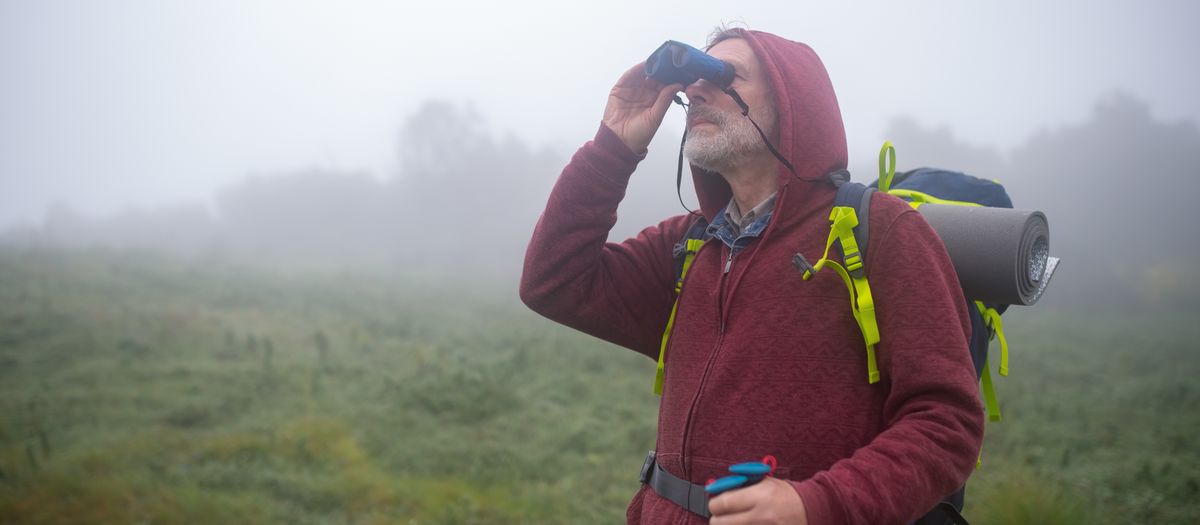
The best travel binocular is the one you will actually carry — pocketable, light, and good enough that you reach for it. This guide explains the specs that decide whether a small pair is worth carrying — magnification, objective, exit pupil, field of view, eye relief and weight — then matches them to five categories: best overall compact, best budget, best pocket 8×25, best image-stabilized and best lightweight full-size. Verified picks appear in each slot once real product data is in.
A note on how to read this. There is no single "best" compact binocular for everyone — the right one depends on how small it has to pack, how bright the light is where you use it, and whether you will pay for stabilisation. So the value here is the framework: what each spec changes when you shrink a binocular, so you can shortlist a pair that fits how you travel and watch. Read the framework first, then look at the picks. The one thing worth saying up front: the lightest pair you own is the one you take, and a compact in your pocket beats a full-size pair left at home — so the trade-offs below are all about how small you can go before the view stops being worth it. New to the two numbers on the box? Start with how to choose binoculars.
Specs verified against manufacturer details and current Amazon listings — no hands-on testing claims. Exit pupil and field-of-view figures are physics-derived from published specs (exit pupil = objective ÷ magnification).
How to choose compact binoculars
A handful of specs decide whether a small pair is worth carrying — and the objective you give up to save weight is the one to watch.
Objective and exit pupil — what you trade away to go small
Shrinking a binocular means shrinking its front lenses, and that is where the compromise lives. The objective sets how much light the pair gathers, and with the magnification it sets the exit pupil — the width of the light beam reaching your eye, equal to objective ÷ magnification. Spec-by-spec, an 8×42 gives a bright 5.25mm exit pupil, an 8×32 a still-good 4mm, an 8×25 a 3.1mm, and a 10×25 just 2.5mm. The smaller that figure, the dimmer the view in shade and the fussier the pair is to hold on your eye.
In bright daylight a 3mm exit pupil is plenty, because your own pupil is small — which is why a pocket 8×25 is perfectly good for travel, sport and daytime wildlife. The catch comes in low light, where your pupil widens past what a small objective can fill and the view dims fast. So the honest rule is: match the objective to the light you use it in. Bright and portable? A 25mm compact. Dawn, dusk or woodland? Step up to a 32mm or a full-size 42mm birding pair.
Magnification, eye relief and the eyebox
Eight power is the compact sweet spot, just as it is for full-size birding: high enough for useful detail, low enough to hold steady by hand — and steadiness matters even more in a light pair, which has less mass to damp your tremor. Spec-by-spec, a 10×25 magnifies both the image and every hand-shake, so it dances more than an 8×25 while also giving a dimmer 2.5mm exit pupil. For most people 8× is the better compact choice; reach for 10× only in bright, open conditions where the extra reach pays.
Eye relief and the eyebox are the comfort specs that small binoculars often skimp. Eye relief is how far your eye can sit back and still see the whole field — aim for around 15mm if you wear glasses — and the eyebox is how forgiving the pair is about exact eye position. Compacts tend to have a tighter eyebox, so the image blacks out more easily if you are not lined up just right. A compact with decent eye relief and a forgiving eyebox is far more pleasant to use, which is the difference between a pair you enjoy and one that lives in a drawer. The how-to hub explains these terms in plain English.
Weight, prism type and stabilisation
Weight is the whole point of a compact, and it is set mostly by the objective and the prism. Roof-prism compacts are the standard because they fold slim and pack into a pocket; a double-hinge roof design collapses smallest of all. Porro compacts give a slightly wider, more three-dimensional view for the money but are bulkier, which works against the reason you are buying small in the first place.
Stabilisation is the wildcard spec. Image-stabilized binoculars build in a mechanism that cancels hand-tremor, which lets you hold a 12× or 14× view steady by hand — impossible in an ordinary binocular at that power. Spec-by-spec, that is a real advantage on boats, in safari vehicles and anywhere you want reach without a tripod, but it adds cost, batteries and weight, and it does nothing for brightness. For most travellers a light 8×25 is the better value; for high-power hand-held viewing from a moving platform, stabilisation is the spec that makes it possible.
The compact binoculars compared
A short list of widely available compact and lightweight binoculars, compared on the specs above. Specs are verified against manufacturer details and current Amazon listings — no hands-on testing claims.
| Best for | Magnification | Objective (mm) | Exit pupil | FOV (ft@1000yd) | Weight |
|---|---|---|---|---|---|
| Best overall compact | 8x | 32 mm | 4 mm | 426 ft | Not listed |
| Best budget | 12x | 25 mm | 2.5 mm | Not listed | Not listed |
| Best pocket (8×25) | 8x | 25 mm | 3.1 mm | 435 ft | Not listed |
| Best image-stabilized | 10x | 30 mm | 3 mm | 315 ft | Not listed |
| Best lightweight full-size | 8x | 42 mm | 5.25 mm | 426 ft | 1.45 lb |
Our top picks
Best overall compact: Vortex Optics Diamondback HD 8x32 Binoculars - HD Optical System, Compact, Waterproof, Fogproof

Best overall compact
Vortex Optics Diamondback HD 8x32 Binoculars - HD Optical System, Compact, Waterproof, Fogproof
Vortex Optics
- Magnification: 8x
- Objective (mm): 32 mm
- Exit pupil: 4 mm
- FOV (ft@1000yd): 426 ft
- Eye relief: 16 mm
- Weight: Not listed
The Vortex Diamondback HD 8x32 brings the Diamondback HD optical system into a smaller, lighter 32 mm body with a wide field, making it the best all-round compact for travel and all-day carry — backed by Vortex's unlimited VIP warranty.
Last checked 2026-06-15
Best budget: Occer 12x25 Compact Binoculars for Adults and Kids, Waterproof Folding High Powered Binoculars with Low Light Vision

Best budget
Occer 12x25 Compact Binoculars for Adults and Kids, Waterproof Folding High Powered Binoculars with Low Light Vision
Occer
- Magnification: 12x
- Objective (mm): 25 mm
- Exit pupil: 2.5 mm
- FOV (ft@1000yd): Not listed
- Eye relief: 20 mm
- Weight: Not listed
The Occer 12x25 is a folding waterproof pocket binocular and a long-running Amazon best-seller, offering 12x reach in a sub-$40 package — the best budget pick for casual use, travel, and kids.
Last checked 2026-06-15
Best pocket (8×25): Nikon Trailblazer II 8x25 Ultra-Compact Waterproof Binocular with Roof Prism

Best pocket (8×25)
Nikon Trailblazer II 8x25 Ultra-Compact Waterproof Binocular with Roof Prism
Nikon
- Magnification: 8x
- Objective (mm): 25 mm
- Exit pupil: 3.1 mm
- FOV (ft@1000yd): 435 ft
- Eye relief: 10 mm
- Weight: Not listed
The Nikon Trailblazer II 8x25 is a waterproof, foldable roof-prism pocket binocular small enough for a jacket pocket, with a wide field for its size — the best true-pocket 8x25 from a major optics brand.
Last checked 2026-06-15
Best image-stabilized: Canon 10x30 Image Stabilization II Binoculars

Best image-stabilized
Canon 10x30 Image Stabilization II Binoculars
Canon
- Magnification: 10x
- Objective (mm): 30 mm
- Exit pupil: 3 mm
- FOV (ft@1000yd): 315 ft
- Eye relief: 14.5 mm
- Weight: Not listed
The Canon 10x30 IS II uses lens-shift image stabilization at the press of a button to steady the view at 10x, making it the best stabilized compact for handheld viewing of wildlife, sport, and the night sky.
Last checked 2026-06-15
Best lightweight full-size: Celestron – TrailSeeker 8x42 Binoculars – Fully Multi-Coated Optics – Phase and Dielectric Coated BaK-4 Prisms – Waterproof & Fogproof – Rubber Armored

Best lightweight full-size
Celestron – TrailSeeker 8x42 Binoculars – Fully Multi-Coated Optics – Phase and Dielectric Coated BaK-4 Prisms – Waterproof & Fogproof – Rubber Armored
Celestron
- Magnification: 8x
- Objective (mm): 42 mm
- Exit pupil: 5.25 mm
- FOV (ft@1000yd): 426 ft
- Eye relief: 17 mm
- Weight: 1.45 lb
The Celestron TrailSeeker 8x42 uses phase- and dielectric-coated BaK-4 prisms in a magnesium-alloy chassis weighing just 1.45 lb, delivering full-size 42 mm performance with compact-class carry weight — the best lightweight full-size pick.
Last checked 2026-06-15
Who should buy what
The everyday traveller — best overall compact
The best overall compact slot is an 8×32 or 8×25 roof-prism pair, and it is the right pick for most people who want a small binocular. Spec-by-spec, 8× holds steady in the hand, the 32mm or 25mm objective gives a bright-enough daytime view, and the slim folding body packs into a day pack or jacket pocket. It covers travel, sightseeing, daytime wildlife and sport without asking you to carry a full-size pair.
The trade-off is low-light performance: a compact dims sooner than a full-size 42mm because of its smaller exit pupil. For bright, portable use that is exactly the right compromise — the weight saving is the whole point. This is the configuration most travellers settle on, and the one fewest regret carrying. Unsure how small to go for your use? The binocular matcher weighs portability against the light you use it in.
The first compact on a budget — best budget
The best budget slot is about getting a usable compact configuration — an 8× magnification and a 25–32mm objective — without paying for premium glass. Spec-by-spec, a budget compact still gives the same magnification and exit pupil as a pricier one; what you give up is coating quality, a little brightness and edge sharpness, not the fundamental portability that makes a compact worth carrying.
What you sacrifice is refinement and sometimes a tighter eyebox, which makes the pair a touch fussier to hold on the eye. For a first compact that is the right compromise, because the thing you are buying — a light pair you will actually take along — is intact. Many people start with a budget compact, learn how they use it, and only upgrade once they know whether they want better glass or a different size.
The pack-it-anywhere minimalist — best pocket 8×25
The best pocket slot is an 8×25, the smallest configuration still worth using. Spec-by-spec, the 25mm objective and 3.1mm exit pupil are fine in bright daylight, and a double-hinge roof design folds down to fit a jacket pocket and weigh almost nothing. It is the binocular you bring when you would otherwise bring none — for concerts, travel days, festivals and casual daytime wildlife.
The trade-off is brightness and eyebox: in shade or at dusk an 8×25 dims, and its tight eyebox demands you line your eyes up well. For bright, grab-it-and-go use that is no loss at all, because the alternative is leaving the binocular home. As a backyard astronomer I would not reach for a 25mm for the night sky — that wants a big objective — but for a pocketable daytime pair, the 8×25 is hard to beat.
The boat and safari user — best image-stabilized
The best image-stabilized slot suits the user who wants higher magnification by hand from a moving platform — a boat, a safari vehicle, a balcony at a distance. Spec-by-spec, a built-in stabiliser cancels the hand-tremor that magnification multiplies, so a 12× or 14× stabilised pair gives a steady, detailed view that is simply impossible to hold by hand in an ordinary binocular. It turns shaky high power into usable high power.
The trade-off is real: stabilised binoculars cost more, need batteries, weigh more, and the stabiliser does nothing for brightness. This is not a first compact — it is the specialist pick for someone who genuinely needs hand-held reach where a tripod is not an option. For most travellers a light 8×25 is the better value; for the moving-platform user who needs 12×-plus by hand, stabilisation is the spec that makes it work.
The traveller who wants more image — best lightweight full-size
The best lightweight full-size slot is for the traveller who wants more brightness and a bigger view than a pocket compact, and will carry a little more for it. Spec-by-spec, a lightweight 8×32 or trimmed-down 8×42 gives a brighter 4–5.25mm exit pupil and a wider, more comfortable field than a 25mm compact, while still weighing far less than a heavy full-size pair. It is the bridge between pocketable and full performance.
The trade-off is pocketability: a lightweight full-size will not slip into a jacket pocket, so it lives in a bag rather than on your person. For a traveller who values image quality and does not need the very smallest pair, that is a fair trade. This is also the natural upgrade path for a birder who started with a compact and now wants the brighter, wider view — covered in the best binoculars for bird watching guide.
What to buy alongside the binoculars
A compact travel pair wants a protective case or pouch so it survives a packed bag, and a cleaning kit for the dust and fingerprints a pocketable pair attracts. A light strap keeps it to hand on a hike. Ready to step up from a compact to a brighter, wider view? The natural upgrade is a full-size birding pair. Not sure how small to go for the way you travel and watch? Run the binocular matcher and it will weigh portability against the magnification, objective and exit pupil your use actually needs.
Frequently asked questions
What are the best compact binoculars overall?
For most people the best all-round compact is an 8×32 or 8×25 roof-prism pair. Spec-by-spec, the 8× magnification holds steady in the hand, a 32mm objective gives a usable 4mm exit pupil for a bright daytime view, and the slim roof-prism body folds down to pack small and weigh little. An 8×25 packs even smaller and lives in a jacket pocket, at the cost of a dimmer 3.1mm exit pupil. The best compact is the one light enough that you actually carry it. Verified picks land in each slot once real product data is in.
Are compact binoculars worth it, or should I get full-size?
It depends on whether weight decides if the binocular comes along. Spec-by-spec, a full-size 8×42 gives a brighter 5.25mm exit pupil and a wider, more comfortable view, so it wins for dawn birding and any time image quality matters most. A compact 8×25 gives a dimmer 3.1mm exit pupil and a smaller eyebox, but it weighs a fraction as much and packs into a pocket — so for travel, hiking and concerts it is the pair you will actually have with you. The honest answer for many people is to own both: a full-size pair for serious use and a compact for everything else.
How small an objective is too small?
Watch the exit pupil, which is objective ÷ magnification. Spec-by-spec, an 8×25 gives a 3.1mm exit pupil and a 10×25 just 2.5mm — both fine in bright daylight, but they dim noticeably in shade and at dusk because your pupil widens past what they can fill. A 25mm objective is about the practical floor for a usable view; below that, brightness and the eyebox shrink fast. If you mostly use binoculars in good light for travel and daytime wildlife, a 25mm compact is plenty; if you need dawn or dusk performance, step up to a 32mm or a full-size 42mm.
Are image-stabilized binoculars worth it?
For travel, boats, safari vehicles and anyone wanting higher magnification without a tripod, image-stabilized binoculars are a genuine upgrade. Spec-by-spec, a built-in stabiliser cancels the hand-tremor that magnification multiplies, so a 12× or 14× stabilised pair gives a steady, detailed view you simply cannot hold by hand in an ordinary binocular. The trade-offs are cost, batteries and extra weight, and the stabiliser does nothing for brightness. For most casual use a light 8×25 is the better-value pick, but for high-power hand-held viewing from a moving platform, stabilisation is the spec that makes it possible.
What are the lightest binoculars for travel and hiking?
Roof-prism compacts in the 8×25 to 10×25 range are the lightest usable binoculars, often folding to fit a jacket pocket and weighing a fraction of a full-size pair. Spec-by-spec, you accept a smaller exit pupil and a tighter eyebox in exchange for the weight saving — a fair trade when the alternative is leaving the binocular at home. A lightweight full-size 8×32 is the next step up: still far lighter than a 42mm, with a brighter 4mm exit pupil, for travellers who want more image quality and will carry a little more.
Will a compact binocular work for birding?
For bright, open birding and for trips where weight decides whether the binocular comes at all, yes — a compact 8×25 or 8×32 keeps the steady 8× view and a usable field while shedding bulk. Spec-by-spec, the limit is the smaller objective: a compact dims sooner in shaded woods and at dawn than a full-size 8×42, and the smaller eyebox is fussier to hold on the eye. For dawn woodland birding the full-size pair still wins, which is why many birders carry a compact for travel and a 42mm for serious mornings. The best binoculars for bird watching guide covers that upgrade path.