Hunting & Marine Binoculars
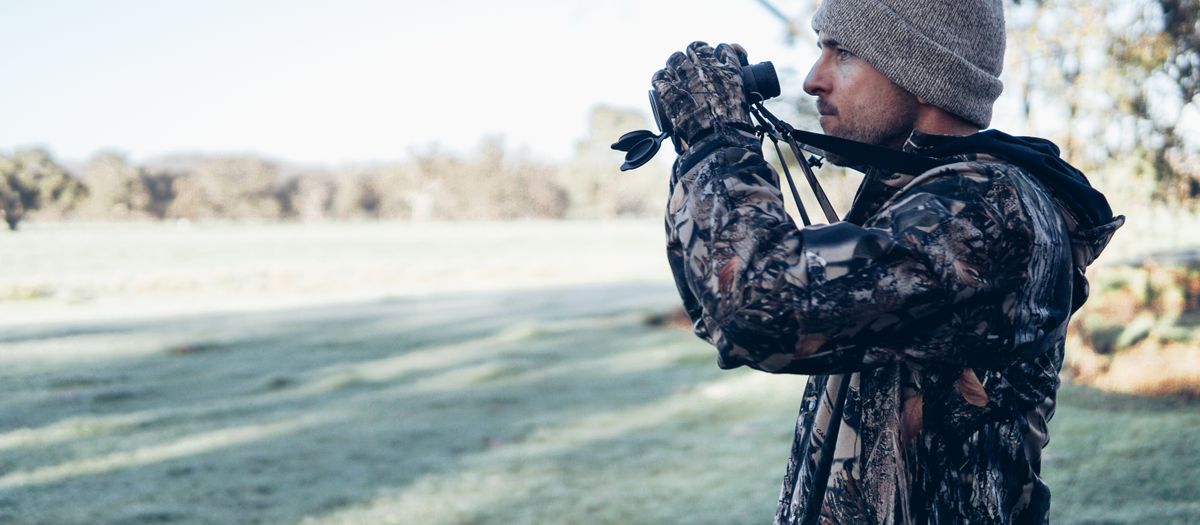
Out hunting or on the water, the demands change: sealing against weather and fog, a bright image at dawn and dusk, and durability that survives a knock. This silo sorts out waterproof and fog-proof construction, 10×42 versus 10×50 for glassing, rangefinder binoculars, and the marine 7×50 with its compass and reticle. Specs are verified against manufacturer and current Amazon listings; no hands-on testing is claimed.
Waterproof and fog-proof sealing
Hunting and marine binoculars live in the worst conditions optics ever face: rain, sea spray, dew, and the sharp temperature swings of a cold dawn. So the first spec to check isn't magnification — it's sealing. Waterproof binoculars are O-ring sealed so water can't get inside; fog-proof binoculars are purged with nitrogen or argon gas so the internal lenses don't mist when you carry them from a warm truck into freezing air. Look for an IPX rating and a nitrogen-purged claim. A binocular that fogs internally is useless exactly when you need it, which is why this is the one spec you should never compromise in the field or on the water. The best hunting binoculars guide checks sealing spec by spec.
10×42 versus 10×50 for glassing
Glassing — patiently scanning country for game — is most of what a hunting binocular does, and the choice usually comes down to 10×42 versus 10×50. The 10×42 is lighter and more compact, easy to carry on a long stalk, with a 4.2mm exit pupil that's fine in daylight. The 10×50 adds a 50mm objective for a 5.0mm exit pupil and a higher twilight factor, which pays off in the dim dawn-and-dusk windows when animals move most — at the cost of more weight around your neck. If you hunt open country at first and last light, the 50mm earns its bulk; if you cover ground and glass mostly in good light, the 42mm is the kinder carry. The 8× vs 10× comparator shows how magnification shifts exit pupil and field for your objective.
Rangefinder binoculars and low-light performance
Rangefinder binoculars build a laser rangefinder into the optic, so you range and glass with one tool instead of two — a genuine advantage when an animal won't wait. They cost more and add electronics, but they remove a step at the moment it counts. Across all hunting glass, the number that quietly decides success is twilight factor (√(magnification × objective)): a higher figure suggests more resolvable detail in poor light, which is why hunters lean toward bigger objectives and a touch more magnification. It's a guide, not a guarantee — good glass and coatings matter too — but it's the right way to think about the low-light edge. The same twilight-factor logic crosses straight over to binoculars for stargazing.
Marine 7×50, compass and reticle
On the water the priorities flip. A pitching deck makes a steady image the whole game, so the classic marine spec is 7×50: the low 7× magnification keeps the rolling view manageable, and the 50mm objective delivers a huge 7.1mm exit pupil for a bright, forgiving image that doesn't black out as the boat moves. Marine pairs are fully waterproof and often add a built-in compass for bearings and a reticle for estimating distance and object size. They're heavier and lower-powered than a hunting binocular by design — that's exactly what the marine environment asks for.
Featured guides
Landing next: Best rangefinder binoculars for hunting, Best marine binoculars, Thermal binoculars for hunting, and Waterproof binoculars explained.
Frequently asked questions
What magnification is best for hunting binoculars?
10× is the common hunting choice — enough reach to judge animals at distance while staying hand-holdable from a brace or pack. Paired with a 42mm objective it stays compact; with a 50mm objective it pulls in more light for the critical dawn and dusk windows. For dense timber or fast, close work, 8× gives a wider field and a steadier image.
Why are 7x50 binoculars standard for marine use?
On a moving boat, steadiness wins. The low 7× magnification keeps the rolling image manageable, and the 50mm objective gives a huge 7.1mm exit pupil for a bright, forgiving view that does not black out as the deck pitches. Marine 7×50s are also fully waterproof and often include a built-in compass and rangefinding reticle.
What does waterproof and fog-proof mean on binoculars?
Waterproof binoculars are O-ring sealed so water cannot get inside, and fog-proof binoculars are purged with nitrogen or argon gas so the internal lenses do not mist when temperatures swing. Together they keep the view clear in rain, spray and the cold dawn air where hunting and marine use live. Look for an IPX rating and a nitrogen-purged claim.
What is twilight factor and why does it matter for hunting?
Twilight factor is the square root of magnification times objective — for a 10×50 that is about 22.4. A higher figure suggests better detail in low light, which matters because game moves most at dawn and dusk. It is why hunters favour bigger objectives and a touch more magnification, though glass quality still affects the real-world result.