Best Hunting Binoculars
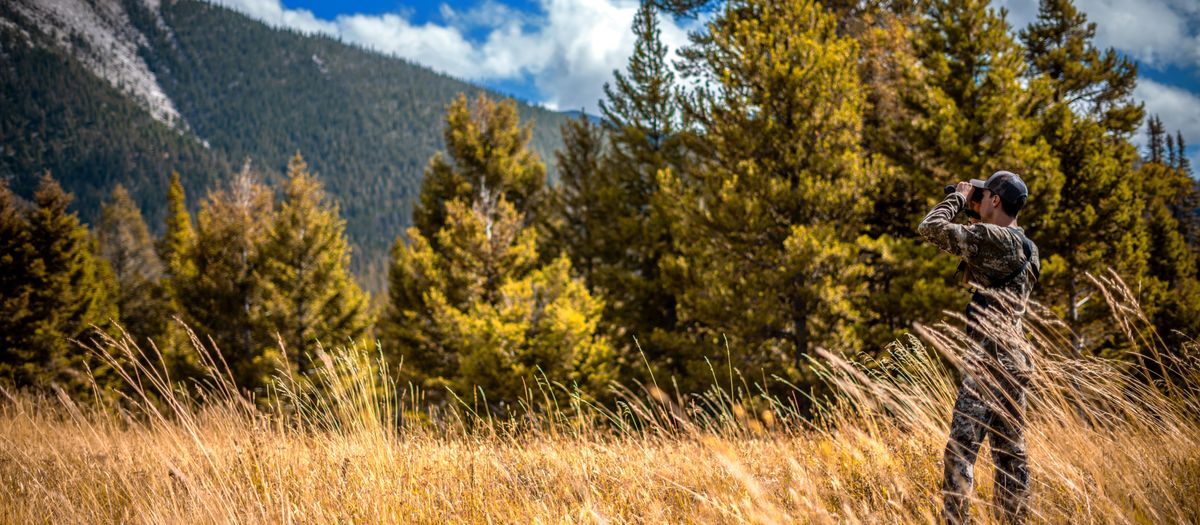
Out hunting or on the water, sealing and low-light performance matter as much as the optics. Waterproof, fog-proof binoculars survive the weather; a generous exit pupil keeps the image bright at dawn and dusk when the animals move. This guide explains the specs that decide the fit — magnification, objective, exit pupil, field of view, waterproofing and weight — then matches them to five categories: best overall hunting 10×42, best budget, best rangefinder binos, best marine 7×50 and best low-light glassing. Verified picks appear in each slot once real product data is in.
A note on how to read this. There is no single "best" hunting or marine binocular for everyone — the right one depends on your terrain, the light you hunt in, whether you are on a boat, and whether you need exact distance. So the value here is the framework: what each spec changes in the field and on the water, so you can shortlist a pair that fits how you use it. Read the framework first, then look at the picks. The one thing worth saying up front, from a lot of dawn glassing: sealing and a bright low-light view matter more than the highest magnification — game moves in the gloom, and a sealed pair you can see through at first light beats a bigger number you cannot. That is why this guide is sealing- and low-light-first.
Specs verified against manufacturer details and current Amazon listings — no hands-on testing claims. Exit pupil and twilight-factor figures are physics-derived from published specs (exit pupil = objective ÷ magnification; twilight factor = √(magnification × objective)).
How to choose hunting and marine binoculars
A handful of specs decide whether a binocular suits hunting or the water — and sealing and low-light brightness matter as much as the optics.
Waterproofing and fog-proofing — the specs you cannot skip
For hunting and marine use, sealing is not a luxury — it is the first filter. Waterproofing means the binocular is O-ring sealed against rain, spray and brief submersion; fog-proofing means the body is purged with dry nitrogen or argon, so no internal moisture condenses when you step from a cold morning into a warm truck or vice versa. Spec-by-spec, an unsealed pair will fog internally at exactly the dew-laden dawn when game moves, and there is no fixing it in the field.
That is why every serious hunting and marine binocular lists both, and why you should treat their absence as disqualifying for these uses. The good news is that sealing adds little weight and is standard on mid-range glassing pairs, so it rarely forces a hard trade-off — it simply has to be on the spec sheet before anything else earns your attention. The hunting and marine hub covers the sealing standards in more depth.
Magnification, objective and exit pupil for low light
Game moves at dawn and dusk, so low-light brightness drives the configuration. Exit pupil — objective ÷ magnification — is the spec to watch: the bigger it is, the brighter the view when your pupil widens in the gloom. Spec-by-spec, a 10×42 gives a 4.2mm exit pupil, a 10×50 a brighter 5mm, and an 8×42 a generous 5.25mm. The twilight factor, √(magnification × objective), tells the same story for fading light: a 10×50 scores √500 ≈ 22.4 against a 10×42's √420 ≈ 20.5.
Magnification itself is a terrain decision. Ten power is the all-round glassing standard: enough reach to pick an animal out of cover across a field or canyon, still steady enough to hold by hand. Push to 12× or 15× for open Western country and you gain reach but lose hand-held steadiness and field of view — a tripod starts to help. The rookie trap is chasing magnification in low light, where a bigger objective at moderate power shows more. This is the same physics that drives the best binoculars for stargazing, where dark-sky exit pupil rules.
Marine 7×50, rangefinders and weight
On the water the rules shift. A pitching deck makes a 10× image dance, so marine binoculars settle on a low 7× for a steady view, paired with a 50mm objective for a 7.1mm exit pupil — about the widest the human eye can use — and the brightest possible image on grey water at dawn and dusk. Spec-by-spec, that 7×50 configuration also carries an internal compass and rangefinder reticle on many marine models for navigation. Its low power and huge exit pupil are why the same 7×50 doubles as a fine wide-field astronomy glass.
Two more specs round out the choice. Rangefinder binoculars build a laser rangefinder into the body, so a hunter glasses and ranges in one unit without switching tools — worth it for bowhunters and long-range shooters, at the cost of weight, battery and price. Weight, finally, decides how far you will carry the pair: a 10×42 stays light for spot-and-stalk and packing in, while a 10×50 or 15×70 trades portability for low-light reach. Match the weight to how far you hunt from the truck.
The hunting and marine binoculars compared
A short list of widely available hunting and marine binoculars, compared on the specs above. Specs are verified against manufacturer details and current Amazon listings — no hands-on testing claims.
| Best for | Magnification | Objective (mm) | Exit pupil | FOV (ft@1000yd) | Waterproofing |
|---|---|---|---|---|---|
| Best overall hunting | 10x | 42 mm | 4.2 mm | 330 ft | Waterproof, fogproof |
| Best budget | 12x | 50 mm | 4.17 mm | Not listed | Waterproof, fogproof, shockproof |
| Best rangefinder binos | 10x | 42 mm | 4.2 mm | 322 ft | Waterproof, fogproof |
| Best marine (7×50) | 7x | 50 mm | 7.14 mm | 377 ft (7.2°) | Waterproof |
| Best low-light glassing | 10x | 42 mm | 4.2 mm | 320 ft (6.1°) | Waterproof |
Our top picks
Best overall hunting: Vortex Optics Diamondback HD 10x42 Binoculars - HD Optical System, Rugged, Waterproof, Fogproof

Best overall hunting
Vortex Optics Diamondback HD 10x42 Binoculars - HD Optical System, Rugged, Waterproof, Fogproof
Vortex Optics
- Magnification: 10x
- Objective (mm): 42 mm
- Exit pupil: 4.2 mm
- FOV (ft@1000yd): 330 ft
- Waterproofing: Waterproof, fogproof
- Weight: 21.3 oz
The Vortex Diamondback HD 10x42 combines an HD optical system, rugged waterproof/fogproof build, and 10x reach at 21.3 oz — the best all-round hunting binocular for the money, backed by Vortex's unlimited VIP warranty.
Last checked 2026-06-15
Best budget: Vortex Triumph HD 12x50 Binoculars - HD Optical System, Fully Multi-Coated Lenses, Rubber Armor, Tripod Adaptable, Waterproof, Fogproof, Shockproof

Best budget
Vortex Triumph HD 12x50 Binoculars - HD Optical System, Fully Multi-Coated Lenses, Rubber Armor, Tripod Adaptable, Waterproof, Fogproof, Shockproof
Vortex Optics
- Magnification: 12x
- Objective (mm): 50 mm
- Exit pupil: 4.17 mm
- FOV (ft@1000yd): Not listed
- Waterproofing: Waterproof, fogproof, shockproof
- Weight: Not listed
The Vortex Triumph HD 12x50 delivers 12x power and a 50 mm objective in a rugged, fully multi-coated, waterproof package for around $120 — the best budget pick for hunters wanting reach and the Vortex warranty.
Last checked 2026-06-15
Best rangefinder binos: Vortex Optics Fury HD 5000 10x42 Laser Rangefinding Binoculars

Best rangefinder binos
Vortex Optics Fury HD 5000 10x42 Laser Rangefinding Binoculars
Vortex Optics
- Magnification: 10x
- Objective (mm): 42 mm
- Exit pupil: 4.2 mm
- FOV (ft@1000yd): 322 ft
- Waterproofing: Waterproof, fogproof
- Weight: Not listed
The Vortex Fury HD 5000 builds a laser rangefinder (to 5,000 yards on reflective targets) into a 10x42 HD binocular, letting hunters glass and range in one unit — the best rangefinding binocular for serious long-range hunting.
Last checked 2026-06-15
Best marine (7×50): Steiner Marine Binoculars 7x50 - Quality Performance Water-Going Optics, Waterproof, Auto-Focus

Best marine (7×50)
Steiner Marine Binoculars 7x50 - Quality Performance Water-Going Optics, Waterproof, Auto-Focus
Steiner
- Magnification: 7x
- Objective (mm): 50 mm
- Exit pupil: 7.14 mm
- FOV (ft@1000yd): 377 ft (7.2°)
- Waterproofing: Waterproof
- Weight: Not listed
The Steiner Marine 7x50 pairs low 7x power with a 50 mm objective and a 7.14 mm exit pupil for a steady, bright, wide view on the water, plus Steiner's sports-auto-focus and waterproof build — the benchmark 7x50 marine binocular.
Last checked 2026-06-15
Best low-light glassing: Athlon Optics 10x42 Argos G2 UHD Black Binoculars with Eye Relief for Adults and Kids, High-Powered Binoculars for Hunting, Birdwatching, and More

Best low-light glassing
Athlon Optics 10x42 Argos G2 UHD Black Binoculars with Eye Relief for Adults and Kids, High-Powered Binoculars for Hunting, Birdwatching, and More
Athlon Optics
- Magnification: 10x
- Objective (mm): 42 mm
- Exit pupil: 4.2 mm
- FOV (ft@1000yd): 320 ft (6.1°)
- Waterproofing: Waterproof
- Weight: Not listed
The Athlon Argos G2 UHD 10x42 uses ED glass with phase-coated BaK-4 prisms for high light transmission and contrast at dawn and dusk, making it the best-value low-light glassing binocular for hunters.
Last checked 2026-06-15
Who should buy what
The all-round hunter — best overall 10×42
The best overall hunting slot is a waterproof, fog-proof 10×42, and it is the right pick for the great majority of hunters. Spec-by-spec, 10× reaches across a field or canyon to pull an animal out of cover, the 42mm objective and 4.2mm exit pupil keep the view usable into the low-light hours when game moves, and the sealed, gas-purged body survives the rain, dew and temperature swings that fog lesser glass. It does timber, stand and spot-and-stalk hunting without compromise.
The trade-off is low-light reach: a 10×42 will not match a 10×50 in the last few minutes of legal light. For most hunting that is a fair compromise for the lighter weight and easier carry. This is the configuration most all-round hunters settle on, and the one fewest regret. Hunting mostly open country at the edges of the day? The next low-light slot or a 10×50 is the safer buy — the binocular matcher weighs it against your terrain and light.
The hunter on a budget — best budget
The best budget slot is about getting the specs that matter for hunting — a sealed, fog-proof body and a usable 10×42 configuration — without paying for premium glass. Spec-by-spec, a budget hunting pair still gives the same magnification, exit pupil and waterproofing as an expensive one; what you give up is coating quality, edge sharpness and the last bit of low-light contrast, not the weather sealing or the reach.
What you sacrifice is refinement in the gloom: a budget pair dims a little sooner at dusk and shows more glare against the light. For a hunter on a budget that is the right compromise, because the non-negotiables — sealing and a 10×42 configuration — are intact, and those are the parts that fail you in the field if you skip them. Many hunters start here and only upgrade the glass once they know how and where they hunt.
The bowhunter and long-range shooter — best rangefinder binos
The best rangefinder binos slot suits the hunter who needs exact distance: bowhunters judging a pin, long-range rifle shooters dialling a turret, anyone calling a shot across open ground. Spec-by-spec, these combine a glassing binocular and a laser rangefinder in one body, so you find the animal and read the distance without switching tools or moving at the moment it counts — a real advantage when seconds and stillness matter.
The trade-off is weight, battery dependence and price: you are paying for an electronics package on top of the optics. For a hunter who already carries a separate rangefinder, combining them saves weight and a step; for a stand or timber hunter who rarely ranges, a plain sealed 10×42 is the better-value choice. Buy the rangefinder build only if ranging is a regular part of how you hunt.
The boater and saltwater user — best marine 7×50
The best marine slot is a 7×50, the configuration built for a moving deck. Spec-by-spec, the low 7× magnification stays steady where a 10× would dance with the boat, the 50mm objective yields a 7.1mm exit pupil for the brightest possible view at dawn, dusk and on grey water, and a fully sealed body shrugs off spray and salt. Many marine 7×50s add an internal compass and rangefinder reticle for navigation.
The trade-off is reach and detail: at 7× you see less far and less fine detail than a 10×, which is simply the price of a steady, bright view on the water. For marine use that is exactly the right call — a steady image you can actually read beats a shaky higher-power one. As a bonus, that same low-power, big-exit-pupil 7×50 makes a superb wide-field astronomy glass, which is why it appears on the best binoculars for stargazing guide too.
The dawn-and-dusk glassing hunter — best low-light 10×50
The best low-light glassing slot is for the hunter who lives in the first and last light, glassing open country for game on the move. Spec-by-spec, a 10×50 gives a brighter 5mm exit pupil and a higher twilight factor (about 22) than a 10×42, so it shows more detail in the gloom when it matters most — the few minutes that often decide a hunt.
The trade-off is weight and bulk: a 50mm pair is heavier to carry and to hold steady than a 42mm. For a hunter whose success hinges on low-light glassing that is a fair price, and a harness takes the weight off your neck. This same low-light physics — bigger objective, bigger exit pupil — is exactly what drives the astronomy binoculars, so a good low-light glassing pair often doubles for the night sky.
What to buy alongside the binoculars
A hunting pair carried all day wants a chest harness rather than a neck strap — it takes the weight off your neck and keeps the pair steady and silent on your chest. A cleaning kit handles rain, dust and salt spray, and a sealed case protects it in the pack. Glassing in poor light? The low-light physics crosses straight over to the best binoculars for stargazing, so a good 10×50 serves double duty. Not sure on the configuration? Run the binocular matcher and it will pin down the magnification, objective and exit pupil for your terrain and light.
Frequently asked questions
What are the best hunting binoculars overall?
For most hunters the best all-round choice is a waterproof, fog-proof 10×42. Spec-by-spec, 10× magnification reaches across a field or canyon to pick an animal out of cover, the 42mm objective gives a 4.2mm exit pupil that stays bright into the low-light hours when game moves, and the sealed, gas-purged body survives rain, dew and the cold-to-warm swings that fog lesser glass. Open-country and Western hunters often step up to a 10×50 for more low-light reach. Verified picks land in each slot once real product data is in.
Is 10×42 or 10×50 better for hunting?
Both glass at 10×; the difference is the objective. Spec-by-spec, a 10×42 gives a 4.2mm exit pupil and weighs less, which suits timber, stand hunting and anyone carrying the pair far. A 10×50 gives a brighter 5mm exit pupil and a higher twilight factor, so it shows more in the first and last light when game is on the move — at the cost of more weight and bulk. Choose 10×42 for portability and mixed cover; choose 10×50 for open country and serious low-light glassing. The matcher tool weighs it against your terrain and light.
What does waterproof and fog-proof actually mean?
Waterproof means the binocular is O-ring sealed so water cannot get inside, often rated to survive brief submersion. Fog-proof means the body is purged with dry nitrogen or argon gas, so there is no internal moisture to condense when you move between cold and warm air — the dreaded fogged-up view at dawn. Spec-by-spec, the two go together on any binocular built for hunting or the water, and they are not optional in those uses: weather and temperature swings are guaranteed, and unsealed glass will fail you in exactly the conditions that matter.
Are rangefinder binoculars worth it for hunting?
For hunters who need exact distance — bowhunters, long-range rifle shooters, anyone judging a shot across open ground — rangefinder binoculars combine glassing and ranging in one unit, so you find the animal and read the distance without switching tools or moving. Spec-by-spec, you pay for an electronics package and battery on top of the optics, and they cost and weigh more than a plain pair. For a hunter who already carries a separate rangefinder, combining them saves weight and a step at the moment it counts; for a stand or timber hunter who rarely ranges, a plain sealed 10×42 may be the better-value choice.
Why are 7×50 binoculars the marine standard?
On a moving boat, two specs rule: a steady image and a bright one. Spec-by-spec, a 7×50 gives a low 7× magnification that stays usable on a pitching deck where a 10× would dance uncontrollably, and a 50mm objective that yields a 7.1mm exit pupil — about the widest a human eye can use — for a bright view at dawn, dusk and on grey water. Many marine 7×50s add a compass and rangefinder reticle for navigation. The low power and big exit pupil are exactly why the same 7×50 also makes a superb wide-field astronomy glass.
What magnification is best for low-light glassing?
Favour exit pupil and twilight factor over raw magnification. Spec-by-spec, a bigger objective at moderate power wins in the gloom: a 10×50 (5mm exit pupil, twilight factor about 22) or an 8×42 (5.25mm exit pupil) shows more at dawn and dusk than a 12×42 (3.5mm exit pupil), because your widening pupil can use the bigger beam of light. The rookie trap is reaching for more magnification in low light — past a point it dims and shakes the view rather than helping. This same low-light physics is why these picks cross over with the astronomy binoculars guide.