Binoculars for Bird Watching
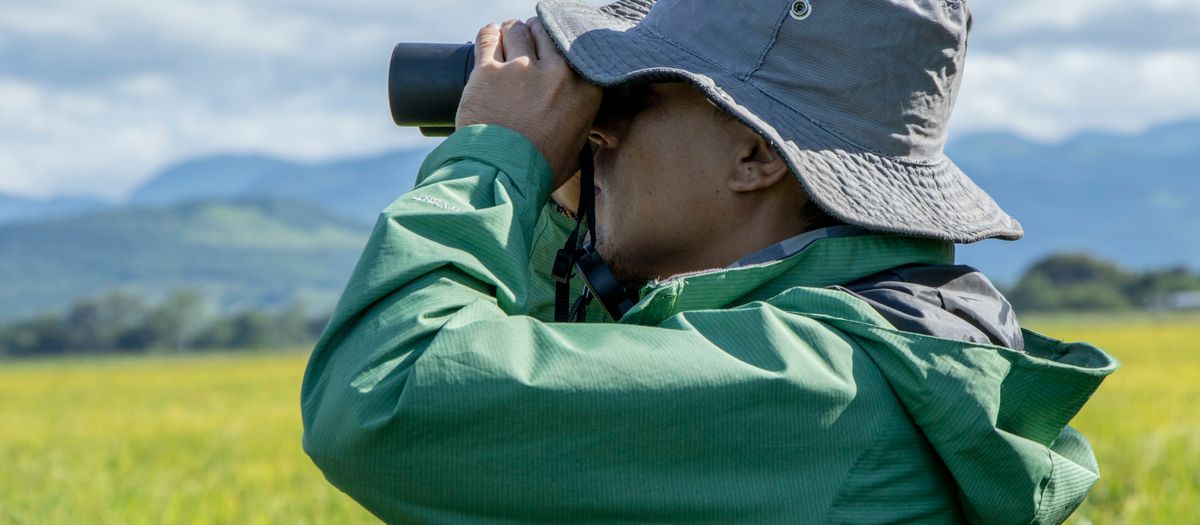
Birding is where most people meet binoculars, and where the wrong pair does the most damage — too much magnification, too heavy, too shaky on a small warbler. This silo sorts out why 8×42 is the birder default, how field of view and close focus matter, and why weight and stability beat raw power. Specs are verified against manufacturer and current Amazon listings; no hands-on testing is claimed.
Why 8×42 is the birder default
If there is one configuration that does almost everything a birder asks, it's the 8×42. The 8× magnification keeps the field of view wide, which is what lets you find a warbler flitting through a tree instead of losing it the moment it moves. The 42mm objective gives a 5.25mm exit pupil (42 ÷ 8), bright enough to hold up in shaded woods and at first light, when the best birding happens. And it's light enough to raise a hundred times in a morning without your arms giving out. That last point is personal: my first pair was a set of 10×50s I bought thinking more power had to be better, and out at the feeder they were too heavy and too shaky to keep on a small, fast bird. Switching to an 8×42 was the moment it clicked — a steady, bright, wide view beats a powerful one you can't hold. For most birders, an 8×42 makes sense because it's the do-everything pair. The best binoculars for bird watching guide works through the spec-by-spec picks.
Field of view and close focus for warblers
Two specs matter more in birding than almost anywhere else: field of view and close focus. A wide field finds the bird and keeps it in view as it moves — the single biggest reason I'd point a new birder to 8× over 10×, because more magnification quietly narrows the very field that helps you locate your subject. Close focus is the nearest distance the binocular will sharply focus, and a short one (around 6–8 feet) is what lets you study a warbler or a butterfly that lands a few yards off rather than seeing a blur. For backyard and woodland birding, where so much happens close, a short close focus is worth prizing. To weigh the 8× versus 10× decision for yourself, the 8× vs 10× comparator lays them side by side on field of view, exit pupil and stability.
Weight and stability beat raw power
The instinct every beginner has is that a bigger first number means a better binocular. In the field it's the opposite. Magnification multiplies the image, but it also multiplies every tremor in your hands, and a heavier pair fatigues your arms until the shake gets worse. The honest rule from years behind the glass: a pair you can hold steady beats a pair with a bigger number on the box every single morning. That's why 8×42 wins for most birders, and why, if you genuinely need high power for distant raptors, the answer is to brace against something or use a tripod rather than buy stronger forearms. New to all of this? The how to choose binoculars pillar explains exit pupil, twilight factor and the weight trade-off in plain English.
Roof versus porro and eye relief for glasses
Nearly every modern birding pair uses roof prisms — slim, light, easy to seal against water and fog, which is exactly what you want for a pair you carry all day in changeable weather. Porro prisms, with their classic stepped shape, can give more depth and brightness per dollar and still show up on good-value pairs, but they're bulkier. If you wear glasses, watch one more number: eye relief, the distance your eye can sit from the eyepiece and still see the full field. Glasses-wearers want around 16mm or more, with twist-down eyecups, so you don't lose the edges of the view. It's a small spec that quietly decides whether a binocular is comfortable for you.
Featured guides
Landing next: Best compact binoculars for bird watching, 8×42 vs 10×42 for birding, Best binoculars for safari, and Vortex Diamondback HD 10×42.
Frequently asked questions
What is the best magnification for birding binoculars?
For most birders, 8× is the sweet spot. It gives a wide field of view to find a moving bird, a bright 5.25mm exit pupil on a 42mm objective, and an image steady enough to hold through a whole morning. Step up to 10× only if you mainly watch at distance in open country and can brace the binocular.
Why is 8x42 the default birding binocular?
An 8×42 balances everything a birder needs: a wide field of view to locate fast-moving birds, a 5.25mm exit pupil that stays bright in shaded woods and at dawn, light enough weight to carry all day, and close focus for warblers a few yards off. It is the do-everything pair, which is why it is the most recommended birding configuration.
Do I need waterproof binoculars for bird watching?
It is worth having. Birding happens at dawn, in dew, and in changeable weather, so waterproof and fog-proof sealing protects the binocular and keeps the view clear when temperatures swing. Most modern roof-prism birding pairs are sealed and nitrogen-purged as standard, so you rarely have to pay extra for it.
What is close focus and why does it matter for birding?
Close focus is the nearest distance a binocular can sharply focus on. A short close focus — around 6 to 8 feet — lets you study a warbler or a butterfly that lands close, instead of seeing only a blur. It is one of the most underrated specs for backyard and woodland birding, where subjects are often just a few yards away.