Best Binoculars for Bird Watching
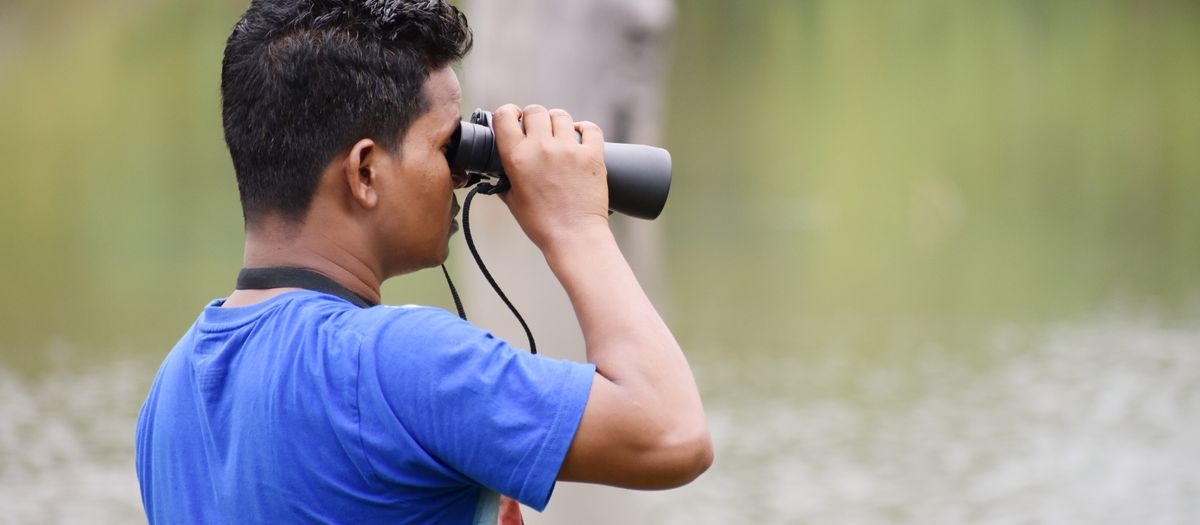
The right birding binocular is the one you can hold steady on a small, fast bird and still pick out the field marks. For most birders that means an 8×42 — enough magnification to fill the view, a wide field to find the bird, and a bright, easy-to-hold image. This guide explains the specs that decide the fit — magnification, objective, exit pupil, field of view, eye relief and prism type — then matches them to five categories: best overall 8×42, best budget, best compact for birding, best for glasses-wearers and best premium glass. Verified picks appear in each slot once real product data is in.
A note on how to read this. There is no single "best" birding binocular for everyone — the right one depends on whether you bird in shaded woods or open water, whether you wear glasses, and how far you carry the pair. So the value here is the framework: what each spec changes, so you can shortlist a pair that fits your birding and your eyes. Read the framework first, then look at the picks. The one thing worth saying up front, from years at the feeder and on the hawk watch: a pair you can hold steady beats a pair with a bigger number on the box every single morning. Most birders settle on 8×42 for exactly that reason — which is why this guide is 8×42-first.
Specs verified against manufacturer details and current Amazon listings — no hands-on testing claims. Exit pupil and field-of-view figures are physics-derived from published specs (exit pupil = objective ÷ magnification; twilight factor = √(magnification × objective)).
How to choose binoculars for bird watching
A handful of specs decide whether a binocular suits birding — and field of view and steadiness matter more than raw magnification.
Magnification and objective — why 8×42 is the birder default
Every binocular is described by two numbers: magnification times objective diameter. An 8×42 makes the bird look eight times closer through 42mm front lenses; a 10×42 makes it ten times closer through the same 42mm. The temptation is to reach for the bigger first number, but in birding that backfires. Spec-by-spec, 8× holds steadier in the hand than 10× because higher magnification multiplies every tiny hand-tremor — at 10× the image visibly dances on a small, close bird, and at 12× or more it is barely usable without a tripod. Eight power keeps the view calm enough to read fine field marks.
The objective sets how much light the binocular gathers and, with the magnification, how bright the view is. A 42mm objective is the birding sweet spot: big enough for a bright image in shaded woods and at dawn, small enough that the pair stays light on a neck strap all day. That is why 8×42 — not 8×32 and not 10×50 — is the do-everything birding configuration most people end up with. If you want the full case for 8× over 10×, the 8× vs 10× comparator lays it out spec for spec.
Exit pupil and brightness — the dawn and dusk spec
Exit pupil is the width of the beam of light leaving each eyepiece, and it is simple physics: exit pupil = objective ÷ magnification. An 8×42 gives a 5.25mm exit pupil; a 10×42 gives 4.2mm. The bigger that figure, the brighter the view in low light, because your own pupil widens to about 5–7mm in shade and at dawn, and an exit pupil that matches feeds your eye all the light it can use. Spec-by-spec, that 5.25mm versus 4.2mm gap is why an 8×42 looks noticeably brighter than a 10×42 in the woods at first light — the prime time for songbirds.
The related figure for dawn and dusk is the twilight factor, √(magnification × objective). For an 8×42 that is √336 ≈ 18.3; for a 10×50 it is √500 ≈ 22.4. A higher twilight factor predicts more detail in fading light, where magnification and aperture both help. For typical daytime birding, exit pupil and field of view matter more; the twilight factor comes into its own for crepuscular birds and for the low-light glassing covered on the hunting binoculars guide.
Field of view, eye relief and prism type
Field of view is how wide a slice of the world you see, given in feet at 1,000 yards. It is the spec that decides how quickly you get on a flitting bird, and a wider field makes following one through brush far easier. Spec-by-spec, 8× binoculars give a wider field than 10× at the same objective — another reason 8×42 wins for birding. Pair that with close focus: a pair that focuses down to about 6–8 feet lets you watch a feeder bird or a butterfly almost at arm's length.
Eye relief is how far your eye can sit from the lens and still see the whole field — the make-or-break spec for anyone in glasses. Aim for roughly 15mm or more, with twist-up eyecups, so the full view survives behind spectacles. Prism type, finally, is roof versus porro. Roof-prism binoculars are slim, light and sealed — the modern birding standard, and what most pairs on the birding hub use. Porro prisms are bulkier but give a wider apparent view and more depth for the money, which is why they still shine in budget and astronomy pairs.
The birding binoculars compared
A short list of widely available birding binoculars, compared on the specs above. Specs are verified against manufacturer details and current Amazon listings — no hands-on testing claims.
| Best for | Magnification | Objective (mm) | Exit pupil | FOV (ft@1000yd) | Prism |
|---|---|---|---|---|---|
| Best overall (8×42) | 8x | 42 mm | 5.25 mm | 388 ft | BaK-4 roof |
| Best budget | 8x | 42 mm | 5.2 mm | 367 ft (7°) | BaK-4 roof |
| Best compact for birding | 8x | 32 mm | 4 mm | 388 ft | BaK-4 roof |
| Best for glasses-wearers | 8x | 42 mm | 5.25 mm | 393 ft | Roof (fully multi-coated) |
| Best premium glass | 8x | 42 mm | 5.25 mm | 426 ft | Roof (ED glass, fully multi-coated) |
Our top picks
Best overall (8×42): Celestron - Nature DX 8x42 Binoculars – Ideal for Birding and Outdoors – 42mm Objective Lenses – Wide 7.4° Field of View – BaK-4 Prisms – Fully Multi-Coated – Waterproof and Fogproof

Best overall (8×42)
Celestron - Nature DX 8x42 Binoculars – Ideal for Birding and Outdoors – 42mm Objective Lenses – Wide 7.4° Field of View – BaK-4 Prisms – Fully Multi-Coated – Waterproof and Fogproof
Celestron
- Magnification: 8x
- Objective (mm): 42 mm
- Exit pupil: 5.25 mm
- FOV (ft@1000yd): 388 ft
- Eye relief: 17.5 mm
- Prism: BaK-4 roof
The Celestron Nature DX 8x42 is a fully multi-coated, waterproof roof-prism binocular with BaK-4 glass and a wide 7.4° field, making it the go-to all-round 8x42 for everyday birding.
Last checked 2026-06-15
Best budget: Celestron - Outland X 8x42 Binoculars – Ideal for Birding and Outdoors – 42mm Objective Lenses – Wide 7° Field of View – BaK-4 Prisms – Multi-Coated – Waterproof and Fogproof

Best budget
Celestron - Outland X 8x42 Binoculars – Ideal for Birding and Outdoors – 42mm Objective Lenses – Wide 7° Field of View – BaK-4 Prisms – Multi-Coated – Waterproof and Fogproof
Celestron
- Magnification: 8x
- Objective (mm): 42 mm
- Exit pupil: 5.2 mm
- FOV (ft@1000yd): 367 ft (7°)
- Eye relief: 17.8 mm
- Prism: BaK-4 roof
The Celestron Outland X 8x42 is a waterproof, multi-coated roof-prism binocular with long 17.8 mm eye relief at an entry price — the best value pick for new birders.
Last checked 2026-06-15
Best compact for birding: Celestron - Nature DX 8x32 Binoculars – Ideal for Birding and Outdoors – 32mm Objective Lenses – Wide 7.4° Field of View – BaK-4 Prisms – Fully Multi-Coated – Waterproof and Fogproof
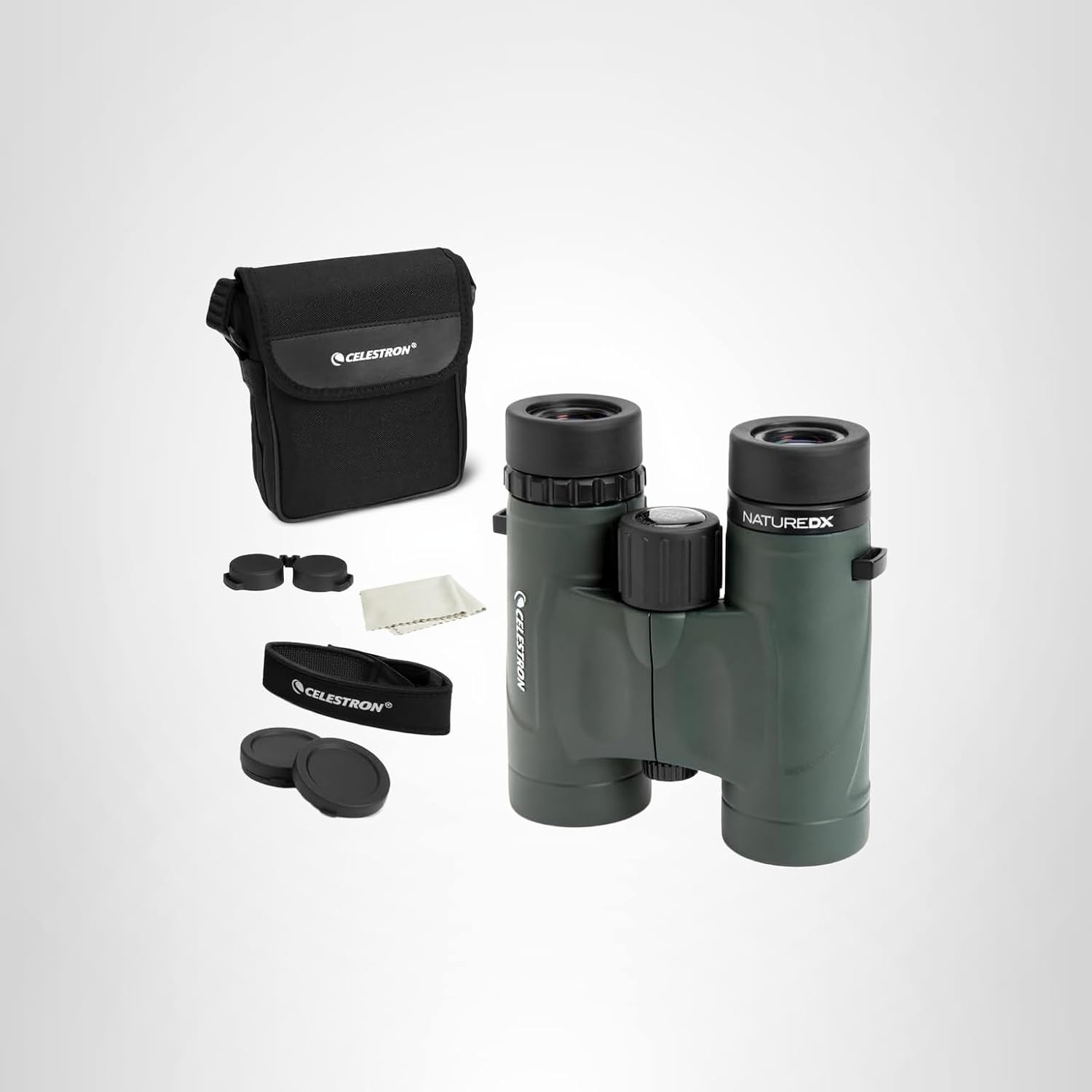
Best compact for birding
Celestron - Nature DX 8x32 Binoculars – Ideal for Birding and Outdoors – 32mm Objective Lenses – Wide 7.4° Field of View – BaK-4 Prisms – Fully Multi-Coated – Waterproof and Fogproof
Celestron
- Magnification: 8x
- Objective (mm): 32 mm
- Exit pupil: 4 mm
- FOV (ft@1000yd): 388 ft
- Eye relief: 17.5 mm
- Prism: BaK-4 roof
The Celestron Nature DX 8x32 packs the Nature DX optics into a lighter 32 mm body with the same wide 7.4° field, ideal for birders who hike and want a smaller, lower-weight binocular.
Last checked 2026-06-15
Best for glasses-wearers: Vortex Optics Diamondback HD 8x42 Binoculars - HD Optical System, Non-slip Grip, Waterproof, Fogproof

Best for glasses-wearers
Vortex Optics Diamondback HD 8x42 Binoculars - HD Optical System, Non-slip Grip, Waterproof, Fogproof
Vortex Optics
- Magnification: 8x
- Objective (mm): 42 mm
- Exit pupil: 5.25 mm
- FOV (ft@1000yd): 393 ft
- Eye relief: 17 mm
- Prism: Roof (fully multi-coated)
The Vortex Diamondback HD 8x42 pairs an HD optical system with adjustable twist-up eyecups and 17 mm eye relief, letting glasses-wearers see the full field — backed by Vortex's unlimited VIP warranty.
Last checked 2026-06-15
Best premium glass: Athlon Optics 8x42 Midas UHD Gray Binoculars with ED Glass for Adults and Kids, High-Powered Binoculars for Hunting, Birdwatching, and More
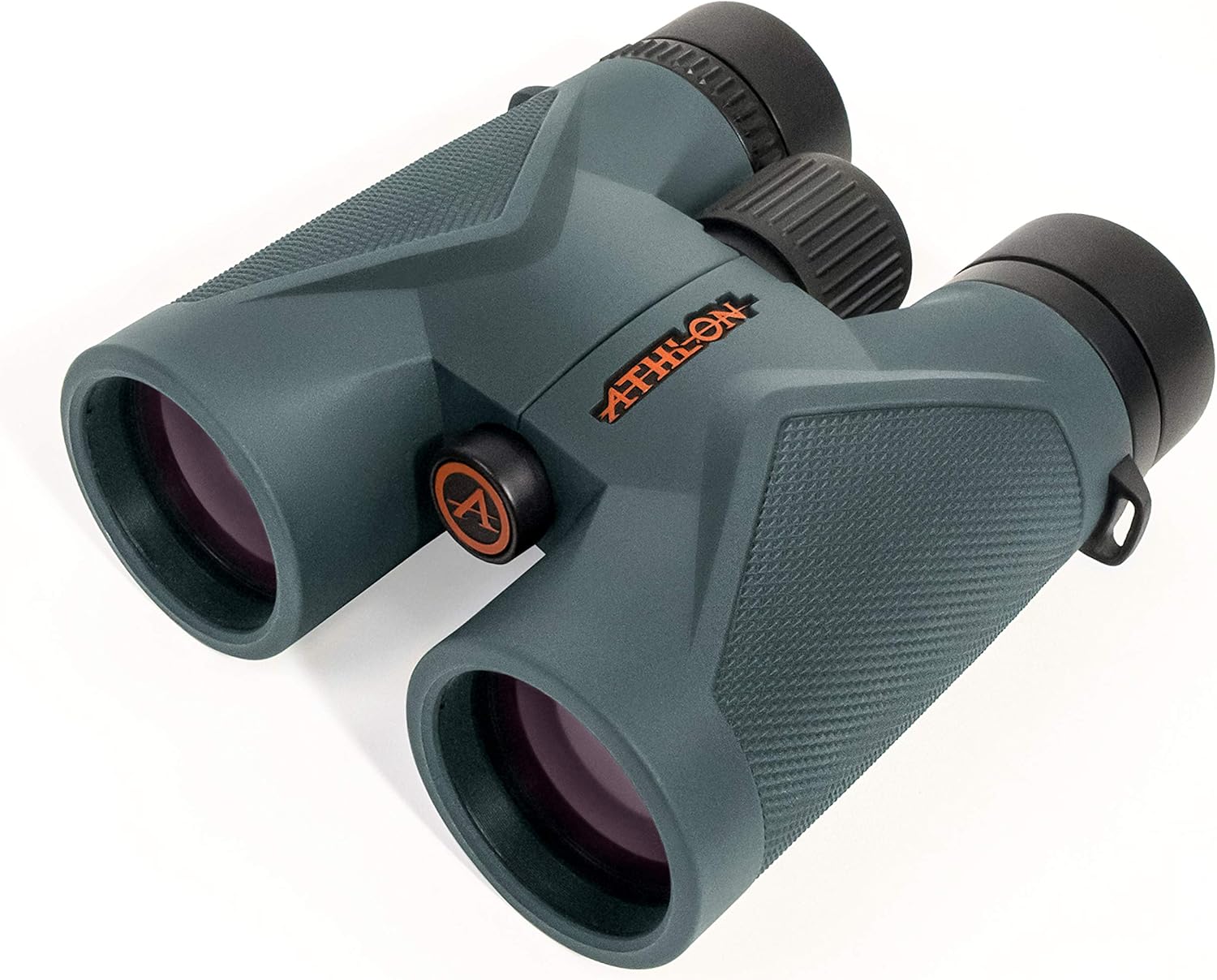
Best premium glass
Athlon Optics 8x42 Midas UHD Gray Binoculars with ED Glass for Adults and Kids, High-Powered Binoculars for Hunting, Birdwatching, and More
Athlon Optics
- Magnification: 8x
- Objective (mm): 42 mm
- Exit pupil: 5.25 mm
- FOV (ft@1000yd): 426 ft
- Eye relief: 17.2 mm
- Prism: Roof (ED glass, fully multi-coated)
The Athlon Midas UHD 8x42 uses extra-low-dispersion (ED) glass and a magnesium chassis to deliver high-contrast, colour-accurate views with a wide field — the premium-glass pick for birders who want top optics without alpha-tier pricing.
Last checked 2026-06-15
Who should buy what
The all-round birder — best overall 8×42
The best overall slot is an 8×42 roof-prism pair, and it is the answer for the great majority of birders. Spec-by-spec, the 8× magnification stays steady in the hand, the 42mm objective and resulting 5.25mm exit pupil keep the view bright in shaded woods and at dawn, and the wide field of view that comes with 8× makes finding and following a small bird far easier. It does everything from the backyard feeder to the woodland trail to the hawk watch without compromise.
The trade-off is that an 8×42 will not reach as far across open water as a 10×42 or a spotting scope. For most birders that is no loss — the bird is rarely the limit, the steadiness and brightness are. This is the configuration most birders settle on, and the one fewest of them regret. If your birding is overwhelmingly open country, read the next-power case in the 8× vs 10× comparator before you buy.
The first pair on a budget — best budget
The best budget slot is about getting the right configuration — an 8×42 with a usable field and decent eye relief — without paying for premium glass. Spec-by-spec, a budget 8×42 still gives the same 5.25mm exit pupil and steady 8× view as an expensive one; what you give up is edge sharpness, low-light contrast and the very last bit of brightness, not the fundamental fit. Often a budget pick is a porro prism, which buys a wider, more three-dimensional view for the money at the cost of a bulkier body.
What you sacrifice is refinement: more glare against the light, slightly softer edges, a touch less contrast in the gloom. For a first pair that is exactly the right compromise, because the configuration that matters — 8×42, wide field, steady image — is intact, and that is the part you cannot fix later by spending more on the wrong numbers. Many a birder starts here and is glad they did not overspend before knowing how they bird.
The traveller and hiker — best compact for birding
The best compact for birding slot suits the birder who carries the pair on long hikes or packs it for travel, where an 8×42 feels heavy by mid-afternoon. Spec-by-spec, a compact 8×32 or 8×25 keeps the steady 8× view and a usable field while shedding weight and bulk. The honest trade-off is the smaller objective: an 8×32 gives a 4mm exit pupil and an 8×25 just 3.1mm, so the view dims sooner in shade and at dusk than a full-size 42mm pair.
For bright, open birding and for any trip where weight decides whether the binocular comes at all, a compact is the right call — the best pair is the one you actually carry. For dawn woodland work where brightness matters most, keep the full-size 42mm. Many birders own both for exactly this reason; the best compact binoculars guide goes deeper on the lightweight and pocket options and where each one earns its place.
The glasses-wearer — best long-eye-relief pair
The best for glasses-wearers slot is decided by one spec: eye relief. Spec-by-spec, a glasses-wearer needs roughly 15mm or more of eye relief with twist-down eyecups, so the eye can sit far enough back behind a lens and still take in the whole field. Too little, and the view shrinks to a dark tunnel with the edges cut away — the single most common reason a perfectly good pair feels wrong to someone in spectacles.
The trade-off is small: long-eye-relief designs are common across mid-range 8×42s, so you rarely pay a real penalty for it — you simply have to check the number before you buy. If you wear glasses in the field, treat eye relief as the first filter, ahead of brand or price, and your shortlist gets much shorter and much more honest very quickly.
The birder who wants the best view — best premium glass
The best premium glass slot is for the birder who is sure of the hobby and wants the finest image. Spec-by-spec, premium 8×42s share the same configuration as a budget pair, but the ED or fluoride glass, better coatings and tighter assembly buy real gains: less colour fringing on a backlit bird, sharper edges, more contrast in the gloom and a brighter, cleaner image overall. The numbers on the box are the same; the quality of the light getting through is not.
The trade-off is cost, plainly — premium glass is a serious step up in price for gains that are real but incremental. It rewards the committed birder who is out most mornings and notices the difference, and it is rarely the right first purchase. Buy the configuration first, learn how you bird, then upgrade the glass if and when the view becomes the thing you most want to improve.
What to buy alongside the binoculars
A birding pair lives on a strap all day, so a comfortable harness or strap takes the weight off your neck and keeps the pair steady on your chest. A cleaning kit keeps dew and pollen off the glass, and a case protects it between trips. Travelling light? Pair your full-size 8×42 with a set of best compact binoculars for the days weight decides whether the binocular comes along. Not sure on the configuration? Run the binocular matcher and it will pin down the magnification, objective and exit pupil for the way you bird.
Frequently asked questions
What are the best binoculars for bird watching overall?
For most birders the best all-round choice is an 8×42 roof-prism pair. Spec-by-spec, 8× magnification is steady enough to hold by hand on a small, fast bird, the 42mm objective gives a bright 5.25mm exit pupil for shaded woods and dawn light, and the wider field of view that comes with 8× makes a flitting warbler far easier to find in the first place. A 10×42 trades some of that ease for reach. Verified picks land in each slot once real product data is in.
Is 8×42 or 10×42 better for birding?
For most birders, 8×42. Spec-by-spec, an 8×42 gives a 5.25mm exit pupil and a wider field of view, so the image is brighter in shade and the bird is easier to locate and hold steady. A 10×42 drops to a 4.2mm exit pupil and a narrower field, and the extra magnification also magnifies every hand-tremor, so the view dances more on a small bird. Choose 10×42 only if your birding is mostly open country — shorebirds, raptors, water — where the extra reach pays off and there is room to find the bird. The deeper case is on the 8×42-vs-10×42 comparison and in the matcher tool.
What magnification do I need for bird watching?
Eight power suits the great majority of birding. It is high enough to fill the view with detail at normal birding range, and low enough that you can hold the image steady by hand and keep a wide field to find the bird. Ten power adds reach for open water and distant raptors but costs you field of view, low-light brightness and hand-held stability. The rookie trap is assuming more magnification is always better — past about 10× without support the image shakes too much to read field marks, which is exactly why most birders settle on 8× rather than 12× or 16×.
Why does field of view matter so much for birding?
Field of view is how wide a slice of the world you see, usually given in feet at 1,000 yards. It matters more in birding than almost any other use because the hardest part is often just getting on the bird — a wide field lets you find a small, moving target fast and follow it through brush. Spec-by-spec, 8× binoculars give a wider field than 10× at the same objective, which is a real reason 8×42 is the birder default. Close focus matters too: a pair that focuses down to around 6 to 8 feet lets you watch butterflies and feeder birds up close.
Do I need waterproof binoculars for bird watching?
It is worth having. Birding happens in dew, drizzle and humidity, and a sealed, nitrogen- or argon-purged pair resists internal fogging when you step from a warm car into cold air, as well as shrugging off rain. Spec-by-spec, "waterproof" and "fog-proof" describe O-ring sealing and dry-gas purging that keep moisture out of the optical path. It is not strictly required for fair-weather backyard birding, but it adds durability for very little weight, and most mid-range 8×42s include it as standard.
What binoculars are best for birders who wear glasses?
Look at the eye relief figure. Eye relief is how far back your eye can sit and still see the full field, and glasses push your eye further from the lens. Spec-by-spec, you want roughly 15mm or more of eye relief, with twist-up eyecups you can lower so the glass sits close. Too little eye relief and a glasses-wearer sees a dark tunnel with the edges cut off. This is the single spec that decides whether a pair works over glasses, which is why it has its own slot in the picks below.