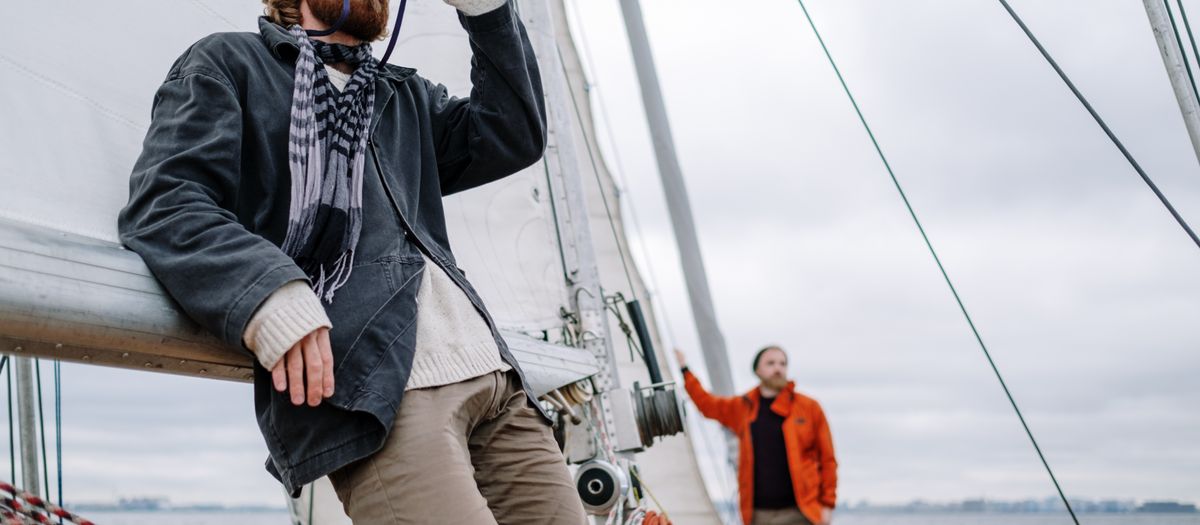
I’m not a sailor, but I’ve learned the hard way — on a foggy ridge and in a drizzly hawk-watch — that “waterproof” is a word with a lot of fine print. On the water, that fine print is the difference between binoculars that last and binoculars that fog into uselessness by mid-morning. Here’s what waterproof and fog-proof actually have to mean, in plain terms.
”Water-resistant” is not “waterproof”
The first trap is the word itself. A lot of binoculars are labelled water-resistant, which means they’ll shrug off a light shower if you wipe them down. That is not the same as waterproof, which means submersible-rated — sealed against actual immersion. On a boat, where spray is constant and a full dunk is a real possibility, water-resistant is not enough. You want genuinely waterproof, and the spec to look for is usually an IPX rating (IPX7 means it survives being submerged in about a metre of water for 30 minutes). If a binocular only says “water-resistant,” treat it as a fair-weather pair.
Fog-proofing is the part people forget
Here’s the one that catches everyone, because it’s invisible until it ruins your day. A perfectly waterproof binocular can still fog up internally — not on the outside glass you can wipe, but inside, on surfaces you can’t reach. That happens when humid air sealed inside the barrels meets a temperature change: warm cabin to cold deck, or a cold morning warming up. The moisture condenses on the internal lenses and the view goes milky.
The fix is nitrogen (or argon) purging. The manufacturer flushes the internal air out and replaces it with dry inert gas, then seals it. No water vapour inside means no internal fogging, ever, across temperature swings. On the water this isn’t a luxury — a binocular that fogs internally at the worst moment is no binocular at all. “Waterproof and fog-proof” should be a single phrase in your head; one without the other is a half-measure.
How the sealing actually works
Genuine waterproof, fog-proof binoculars do three things:
- O-ring sealed at every joint and the focus mechanism, so water can’t get in.
- Nitrogen/argon purged and filled, so no humid air is trapped inside to condense.
- Sealed-build design, which is part of why most marine binoculars are roof-prism or sealed porros — the simpler the path to seal, the more reliable it stays.
If a listing talks about waterproofing but says nothing about nitrogen purging or fog-proofing, that’s a red flag for the water.
Why the 7×50 is the classic marine config
There’s a reason the traditional marine binocular is a 7×50, and it’s all physics:
- Exit pupil: 50 ÷ 7 = 7.1mm. Enormous. On a heaving deck, that big disc of light is hugely forgiving — you can keep the full bright image even as the boat throws your head around, instead of fighting blackouts. It’s also brilliant in the low light of dawn and dusk on the water.
- Stability: at only 7×, hand shake is minimal — and a moving boat already adds plenty of its own movement, so you do not want high magnification multiplying it. A 10× on a rolling deck is a nauseating, unusable mess. The low 7× keeps the view manageable.
Many marine 7×50s also add a built-in compass and a reticle for taking bearings and estimating range, which is genuinely useful on the water and pointless on land.
The little things that save the binocular
- A floating strap. On the water, the day you drop them is the day you find out whether they float. A floating strap (or a buoyant float) is cheap insurance against a binocular at the bottom of the harbour.
- A rain guard and tethered caps, so spray stays off the glass between uses.
- Rubber armour, to survive the inevitable knock against a rail.
The short version: on the water, “waterproof” has to mean truly submersible and nitrogen-purged fog-proof, and the 7×50 config exists because a huge exit pupil and low magnification are exactly what a moving deck demands. Match the binocular to the conditions, not the marketing word on the box. I cover the sealing, the configs and the low-light performance for tough outdoor use in the best hunting binoculars guide.