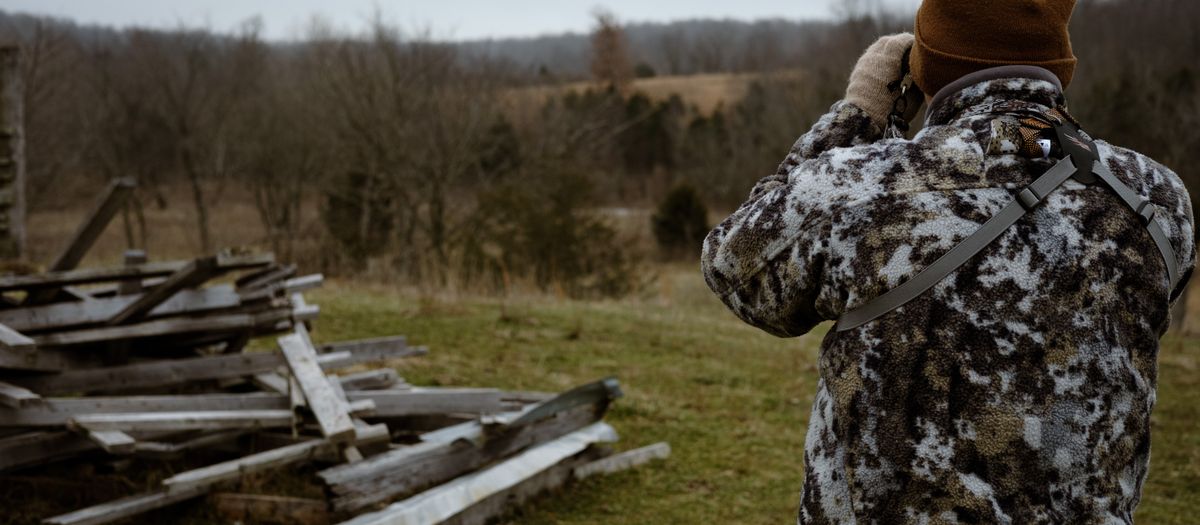
I’m a birder and backyard astronomer first, but the longest, most demanding sessions I ever put a pair of binoculars through are the same kind of session a hunter does: sitting still and glassing — methodically picking apart a far hillside, foot by foot, for a long time, often in the worst light of the day. Glassing punishes a poorly matched binocular and it punishes your eyes. Here’s what I’ve learned about doing it without your eyes giving out.
Why glassing is so hard on the eyes
A quick look through binoculars is easy. Glassing is the opposite of a quick look: it’s holding the view for minutes at a stretch, again and again, often at first or last light when the animals move and the light is thinnest. Three things make or break a long session — and none of them is the magnification number everyone fixates on.
1. Exit pupil — the thing that fights eye fatigue
When your eyes are working hard in low light, a bigger exit pupil is far easier on them. It gives a brighter image and, just as important, it’s forgiving of where your eyes sit behind the binocular — you’re not constantly fighting dark crescents creeping in at the edges as your head shifts. That edge-fighting is a big hidden source of eye strain over a long sit.
Run the numbers on the common hunting configs:
- 10×42: 42 ÷ 10 = 4.2mm exit pupil. Fine in good light, gets tight as the light fades.
- 10×50: 50 ÷ 10 = 5.0mm exit pupil. Noticeably easier in the gloom.
- 8×42: 42 ÷ 8 = 5.25mm, the most forgiving of the three, at the cost of reach.
For long, low-light glassing, that step from 4.2mm to 5.0mm is exactly why a lot of glassers reach for a 10×50 over a 10×42 when weight allows.
2. Twilight factor — your first-and-last-light window
There’s a second number worth knowing, because it captures detail-in-low-light specifically: the twilight factor = √(magnification × objective).
- 10×42: √(10 × 42) = √420 ≈ 20.5
- 10×50: √(10 × 50) = √500 ≈ 22.4
- 8×42: √(8 × 42) = √336 ≈ 18.3
A higher twilight factor means more resolvable detail when the light is poor — it rewards both more magnification and a bigger objective. So in deep dusk, the 10×50 doesn’t just look brighter (exit pupil), it actually lets you pick out more detail (twilight factor). This is the one place raw magnification genuinely earns its keep — when subjects are far and you need to resolve detail at distance in failing light.
3. A tripod — the upgrade nobody wants to carry but everyone needs
Here’s the honest one: the single biggest reduction in eye strain isn’t a binocular at all, it’s a tripod. Holding even a 10× steady for minutes at a time is exhausting, and the constant micro-shake forces your eyes to keep re-focusing on a dancing image, which is what actually burns you out. Lock the binoculars onto a tripod (or brace hard against a pack or a knee) and the image goes still. Suddenly you can study the hillside instead of fighting it, and you’ll spot things you’d have walked right past handheld. Glassers who switch to a tripod almost never go back.
The 10×42 vs 10×50 trade-off, plainly
- 10×42: lighter, packs smaller, brighter-than-enough in decent light. The do-it-all hunting glass if you’re carrying it far.
- 10×50: brighter and more detail at the edges of the day (5.0mm exit pupil, ~22.4 twilight factor), at a real weight and bulk cost. Worth it if you glass a lot at first and last light and aren’t hiking miles.
And for any binocular that’s going to live outdoors in the weather, waterproof and fog-proof sealing is non-negotiable — but that’s its own subject.
Match the glass to your light and how far you carry it, put it on a tripod when you can, and your eyes will still be working at the end of the sit. I broke down the configs, the sealing, and the low-light performance in the best hunting binoculars guide — start there before you buy.