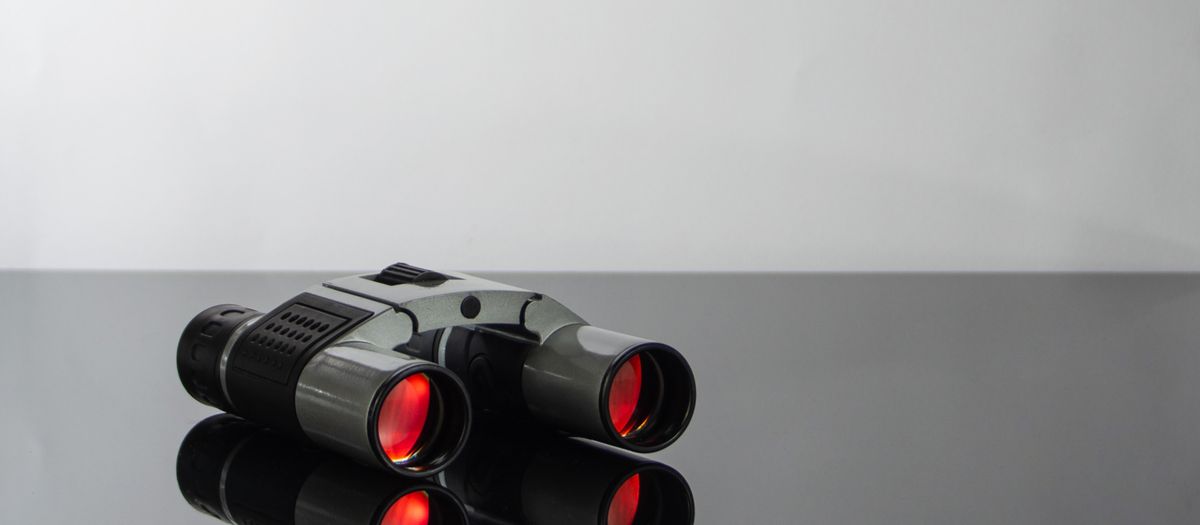
I own two pairs that look like they come from different planets. My birding 8×42 is slim and straight, the two barrels running parallel like a sleek “H.” My astronomy 10×50 is the stepped, zig-zag shape you probably picture when someone says “binoculars” — wider at the front than at the eyepieces. One is a roof prism, the other a porro prism, and the difference is more than looks. Here’s what it actually means out in the field.
What the prism even does
Light coming through a binocular’s objective lens arrives upside-down and back-to-front. The prisms inside flip it the right way round before it reaches your eye. There are two classic ways to fold that light, and that’s the whole roof-versus-porro story.
- Porro prism is the older, stepped design — the objectives sit wider apart than the eyepieces, giving that zig-zag profile.
- Roof prism folds the light along a straighter path, so the barrels run in line and the binocular is slim and compact.
Neither is “better.” They’re different trades, and once you know the trades you can stop arguing about it.
Roof prism — what I notice in the field
My 8×42 is a roof prism, and it’s a roof prism for good reasons:
- Slim and packable. Straight barrels mean it sits flat against my chest, slides into a pack, and isn’t a brick around my neck on a long walk.
- Easier to weatherproof. The compact, in-line build is simpler to seal well, which is why most modern waterproof and fog-proof binoculars are roofs.
- The everyday default. For birding, hiking and travel, the handiness wins. This is the design most “best birding binocular” lists are full of, and rightly so.
The catch: a good roof prism costs more to make than an equivalent porro. To match a porro’s brightness and contrast, a roof needs extra coatings (phase correction, high-reflectivity mirror coatings) that add cost. A cheap roof prism can look dimmer and lower-contrast than a cheap porro of the same size. So with roofs, paying a bit more genuinely buys a better view — you’re paying for the coatings that make the clever design work.
Porro prism — where it still wins
My 10×50 is a porro, and I keep it for what porros are quietly great at:
- More bang for your money. Porros deliver bright, contrasty images at a lower price because they don’t need the special coatings a roof does. Dollar for dollar, a budget porro often out-views a budget roof.
- More depth. The objectives sit wider apart than your eyes, which exaggerates the sense of three-dimensional depth. For static subjects it gives a lovely, rounded view.
- Astronomy and value glass. That brightness-per-dollar is why so many affordable astronomy binoculars — and the classic 7×50 marine glass — are porros.
The catch: porros are bulkier, heavier and harder to fully weatherproof. That stepped shape doesn’t pack as neatly, and the focus mechanism is often more exposed. Mine isn’t something I’d want hanging off my neck for a six-mile hike — but on a tripod under the stars, where weight doesn’t matter and brightness does, it’s perfect.
How I actually choose between them
I don’t think “roof or porro?” I think about the job and the design follows:
- Carry it all day, want it sealed against weather, value handiness? Roof prism — and spend enough that the coatings are good. This is most birding and travel.
- On a budget, or after maximum brightness-per-dollar, or it’s going on a tripod? Porro prism. This is a lot of astronomy and entry-level glass.
- Marine? The classic 7×50 is often a porro for the brightness, though sealed roofs are common now too.
The short version: roof prisms buy you handiness and weatherproofing at a price premium; porros buy you brightness and depth per dollar at a size penalty. Pick the one whose strengths match how you’ll actually use the binoculars. If you want the rest of the jargon decoded — what the two numbers mean, exit pupil, twilight factor, field of view — the how binoculars work hub walks through all of it in the same plain-English way.